






































TEHRAN (MNN); Iran was largely cut off from the outside world on Friday after authorities shut down internet services in an attempt to contain widening protests, with phone calls failing to connect, flights being cancelled and Iranian news websites updating only sporadically.

Supreme Leader Ayatollah Ali Khamenei accused protesters of acting at the behest of US President Donald Trump, alleging that rioters were attacking public property and warning that Tehran would not tolerate people acting as “mercenaries for foreigners”. He also told Trump to address issues within his own country.
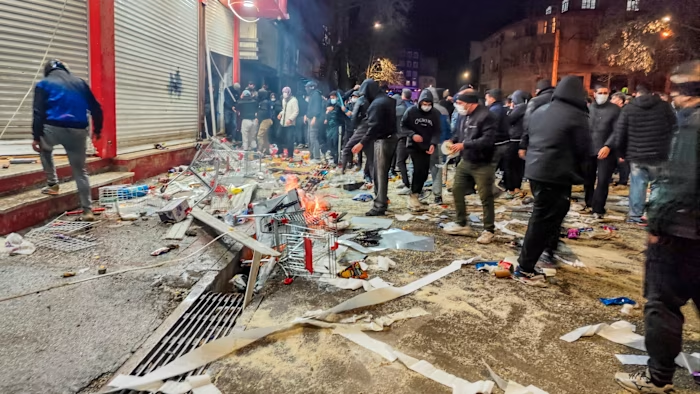
The protests erupted on December 28 over soaring inflation and a deepening economic crisis. While they have not reached the scale of unrest seen three years ago, demonstrations have spread across the country, with dozens reportedly killed. Authorities appear increasingly strained amid a collapsing economy and the fallout from last year’s conflict with Israel and the United States.
According to the US-based Human Rights Activists News Agency, at least 34 protesters and four members of the security forces have been killed, while around 2,200 people have been arrested.
Iranian rights group Hengaw reported that a protest march following Friday prayers in Zahedan, a city with a large Baloch population, was met with gunfire, leaving several people wounded.
Exiled opposition figures also called for further protests. Reza Pahlavi, the son of Iran’s former shah, urged Iranians in a social media post to take to the streets, saying the world was watching. However, President Trump later said he would not meet Pahlavi and was unsure whether supporting him would be appropriate.
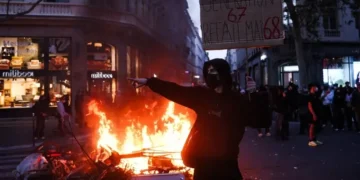
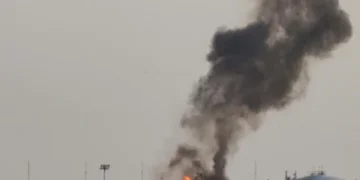
State television aired images overnight showing burning buses, cars and motorbikes, as well as fires at metro stations and banks. Authorities blamed the unrest on the People’s Mujahedin Organisation, also known as the MKO.
In Rasht, a port city near the Caspian Sea, a state TV reporter described the scene as resembling a war zone, claiming shops along a major street had been destroyed. Videos verified by Reuters from Tehran showed hundreds of demonstrators marching, with chants including slogans directly targeting the country’s leadership.
While Iran has suppressed larger protests in the past, it now faces a more severe economic crisis and mounting international pressure after global sanctions linked to its nuclear programme were reimposed in September.
Authorities have adopted a dual strategy, acknowledging economic grievances while condemning violent acts and intensifying security measures. Parliament Speaker Mohammad Baqer Qalibaf said protesters’ concerns should be heard, but warned that cases linked to foreign networks would be treated differently.
In a forceful speech, Ayatollah Khamenei said the Islamic Republic would not retreat in the face of what he described as vandalism, accusing protesters of seeking to please Trump. He said the US president was responsible for the deaths of more than a thousand Iranians and predicted his downfall, likening it to the collapse of Iran’s monarchy in 1979.
The protests, initially driven by economic hardship, have increasingly included direct criticism of the authorities, with chants such as “death to the dictator” and references to the former monarchy.
Flights cancelled, communications cut
Iran blocked internet access overnight, and reporters outside the country were unable to place phone calls to Iran on Friday.
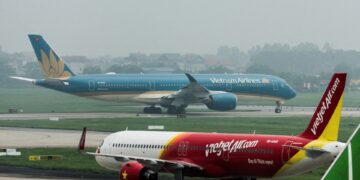
Flight disruptions were also reported. At least six flights between Dubai and Iranian cities were cancelled, while Turkish Airlines suspended all seven of its scheduled flights from Istanbul to Iran, including routes to Tehran, Tabriz and Mashhad. Several Iranian airline flights were also cancelled, according to airport data.
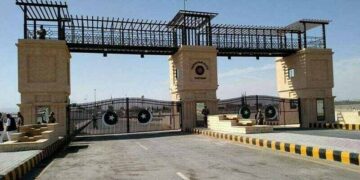
Turkey, which shares a roughly 500-kilometre border with Iran, has three active land crossings between the two countries.