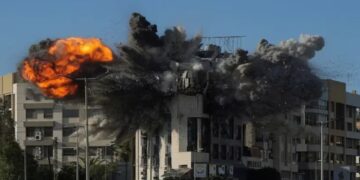



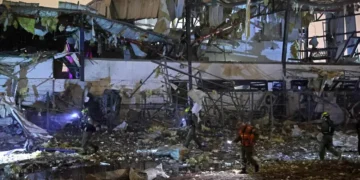

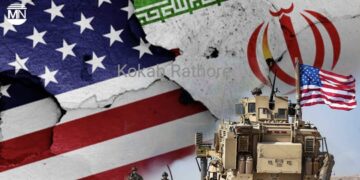








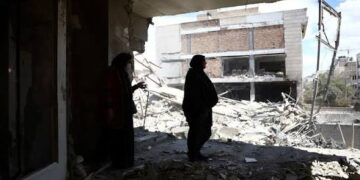









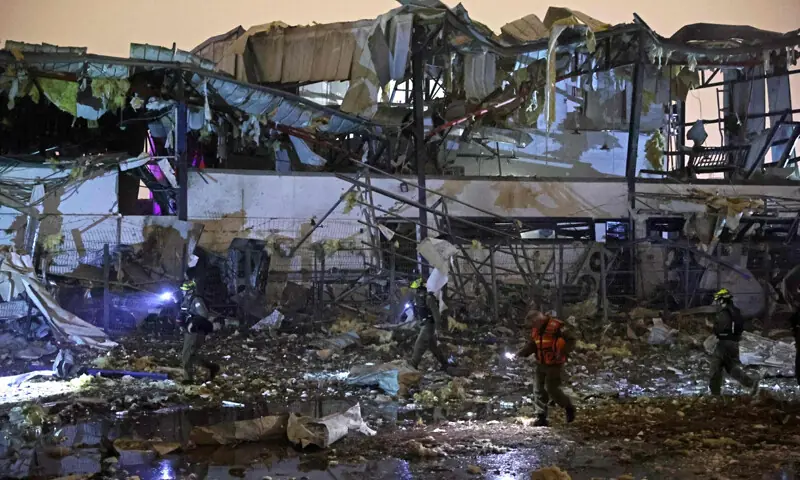
WASHINGTON / TEHRAN / BAGHDAD / PARIS: The US and Israel on Thursday stepped up attacks on Iran, targeting a century-old medical research centre in Tehran, a bridge near the capital and steel plants after President Donald Trump threatened to bomb Iran back to “the Stone Ages”.

Hours later, Trump said the tallest bridge in Iran had been destroyed. He posted footage on social media of smoke rising from the B1 bridge in Karaj, around 35 kilometers southwest of Tehran and warned that there would be further destruction unless Iran comes to the table to end the five-week war.“The biggest bridge in Iran comes tumbling down, never to be used again – Much more to follow! It is time for Iran to make a deal before it is too late, and there is nothing left of what still could become a great country!” Trump said. Iranian state television had earlier reported two US-Israeli strikes on the bridge. “A few minutes ago, the American-Zionist enemy once again targeted the B1 bridge in Karaj,” state TV said, adding that an initial strike had caused two civilian casualties.It said the later attack took place as emergency teams were deployed to the site to help victims of the first strike.
The B1 bridge, which was still under construction, is considered the Middle East’s tallest according to Iranian media, with a 447-foot column.Earlier in the day, Iran threatened “crushing” attacks on the United States and Israel, firing missiles at Tel Aviv.
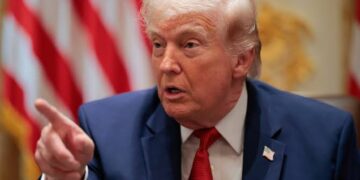
In his White House address, Trump said the US was “very close” to achieving its objectives but warned its attacks would intensify if Iran did not reach a negotiated settlement.“Over the next two to three weeks, we are going to bring them back to the Stone Ages, where they belong,” he said.With his approval rating hitting new lows and Americans feeling a pinch from soaring oil prices, Trump offered a retroactive explanation on why he joined Israel in the attack launched on Feb 28.
“I’m pleased to say that these core strategic objectives are nearing completion,” Trump said in a 19-minute speech. There was little in his address about actual diplomacy.Iran’s response was immediate, with Israeli air defences pressed into action. Four people were reportedly lightly injured in the Tel Aviv area. AFP journalists in Jerusalem hear fresh blasts on Thursday evening.
At least four blasts were heard as sirens rang out in the city, and the military warned residents to take cover after it “identified missiles launched from Iran toward the territory of the State of Israel”. In Tehran, AFP journalists reported a series of loud explosions, sending reverberations across the city. The targets were unclear.
The country’s two largest steel plants have meanwhile been forced offline by several waves of US and Israeli attacks, the companies said.The country’s health ministry said the Pasteur Institute of Iran, a century-old medical centre in Tehran, had been extensively damaged in a strike.
Despite the bombardments, families gathered at Tehran’s Melat park, with men smoking water pipes and children running around playgrounds, to mark the 13th day after Nowruz, the Persian New Year, when people traditionally picnic outdoors, AFP journalists said.
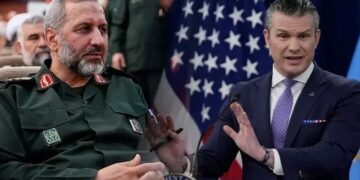
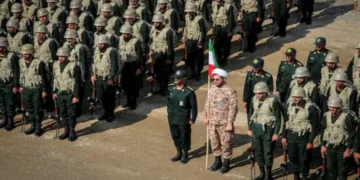
Iran’s operational headquarters must monitor “enemy movements with utmost pessimism and accuracy” and be ready to counter any method of attack, the country’s army commander-in-chief Amir Hatami was quoted as saying by state media on Thursday.
“No enemy troops should survive if adversaries attempt a ground operation,” state media quoted Hatami as saying.Meanwhile, a fire erupted near Iran’s Mashhad airport in the northeast of the country after a projectile hit a fuel tank in the area, AFP reported citing local media. Citing the governor’s office of the northeastern Khorasan Razavi province, the Mehr news agency says no casualties have been reported, and firefighting operations are underway.
‘Immediate’ reopening
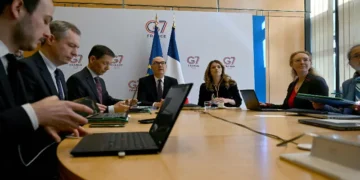
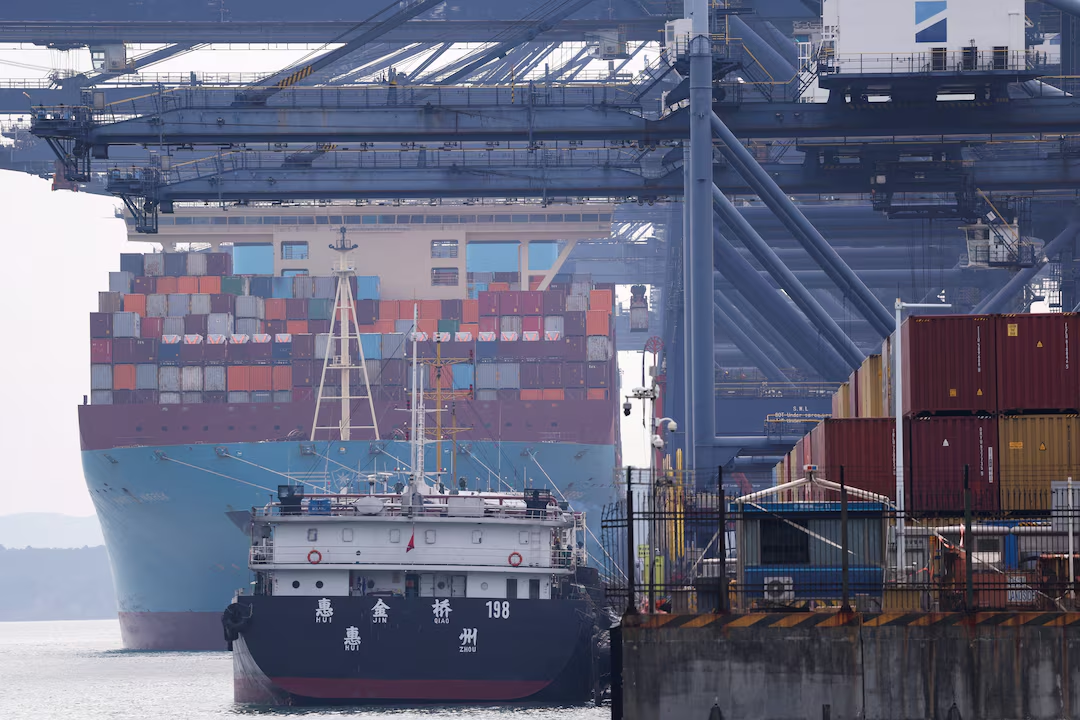
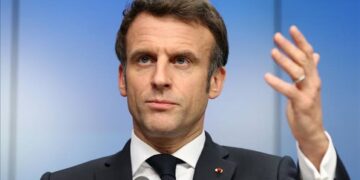
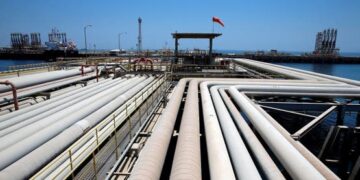
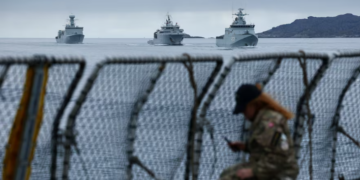
A UK-led meeting of some 40 countries on the strait of Hormuz crisis wrapped up with a demand for the “immediate and unconditional” reopening of the vital shipping route, but no immediate breakthrough.“Iran is trying to hold the global economy hostage in the Strait of Hormuz,” British foreign minister Yvette Cooper said in a statement after international talks.“They must not prevail. To that effect, partners today called for the immediate and unconditional reopening of the Strait and respect for the fundamental principles of freedom of navigation and the law of the sea,” Cooper added. A spokesperson for the French foreign ministry said securing the Strait of Hormuz could “only take place once the intense phase of the bombing is over”. French President Emmanuel Macron, speaking on a visit to South Korea, said a military operation to liberate the Strait of Hormuz was “unrealistic”, while lamenting Trump’s differing daily statements on the Iran war and Nato.
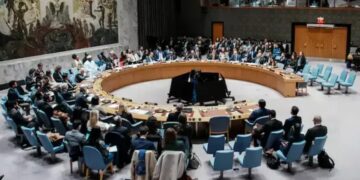
The secretary general of the Gulf Cooperation Council (GCC) called for the UN Security Council to authorise the use of force to protect the Strait of Hormuz from Iranian attacks.“We call upon the Security Council to assume its full responsibility and take all necessary measures to protect maritime routes and ensure the safe continuation of international navigation,” said Jassem al-Budaiwi.
‘Root cause’
China, a major importer of oil through the shipping lane, blamed the United States and Israel for being the “root cause” of the blockage.
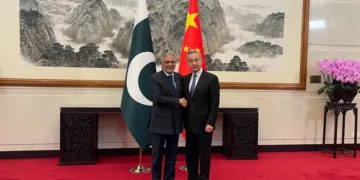
China’s foreign minister Wang Yi said US and Israeli attacks on Iran were a violation of international law, Chinese state media reported, as he held calls with his EU, German and Saudi counterparts.
Meanwhile, Argentina expelled Iran’s diplomatic envoy, Mohsen Soltani Tehrani, following “false, offensive and baseless accusations” by Tehran, the foreign ministry said.
A drone attack targeted the US diplomatic and logistics centre in Baghdad’s international airport complex, causing a fire but no injuries, two Iraqi security sources told AFP.
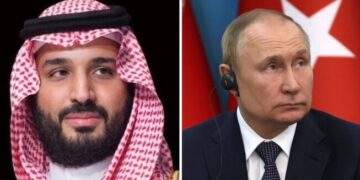
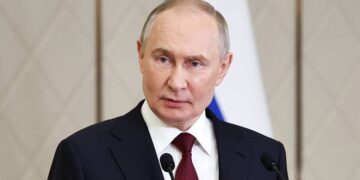
Russian President Vladimir Putin called for intensifying political and diplomatic efforts to end the war during a phone call with Saudi Crown Prince Mohammed bin Salman.
The call comes after Ukraine signed an air-defence deal with Saudi Arabia as the Gulf nation grapples with Iranian drone attacks.