





































PALM BEACH: U.S. President Donald Trump said on Sunday that he and Ukrainian President Volodymyr Zelenskiy were “getting a lot closer, maybe very close” to reaching an agreement to end the war in Ukraine, while noting that the future of the Donbas region remains a major sticking point.

The remarks came during a joint news conference following talks between the two leaders at Trump’s Mar-a-Lago resort in Florida on Sunday afternoon. Both Trump and Zelenskiy said progress had been made on two of the most difficult issues in the negotiations: security guarantees for Ukraine and the status of eastern Ukraine’s Donbas region, which Russia is seeking to seize.
While neither leader shared specific details or set a timeline for a final deal, Trump said it would become clear “in a few weeks” whether the peace talks would succeed, adding that several “thorny issues” related to territory still needed to be resolved.
Zelenskiy said an agreement on security guarantees for Ukraine had already been reached. Trump struck a more cautious tone, saying they were 95% of the way there and that he expected European countries to “take over a big part” of providing those guarantees, with support from the United States.
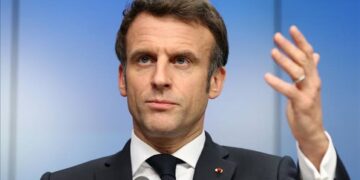
French President Emmanuel Macron said in a post on X after the meeting that progress had been made on security guarantees. He added that countries in the so-called “Coalition of the Willing” would gather in Paris in early January to finalise their “concrete contributions.”
Zelenskiy has previously said he wants to soften a U.S. proposal calling for a full Ukrainian withdrawal from Donbas, a Russian demand that would require Kyiv to give up territory currently held by its forces. Moscow insists on gaining control of the entire Donbas, while Ukraine wants to freeze front lines where they are now.
Both Trump and Zelenskiy acknowledged on Sunday that the fate of Donbas had not yet been decided, though Trump said talks were “moving in the right direction.” As part of a compromise, the United States has suggested creating a free economic zone if Ukraine withdraws, though how such a zone would operate remains unclear.
“It’s unresolved, but it’s getting a lot closer. That’s a very tough issue,” Trump said.
The leaders also offered limited details about post-war security arrangements for Ukraine, an issue Zelenskiy described on Sunday as “the key milestone in achieving a lasting peace.”
Russia has said it would not accept the deployment of foreign troops in Ukraine.
Zelenskiy said any peace deal would need approval from Ukraine’s parliament or through a referendum. Trump said he would be willing to address parliament if that would help secure the agreement.
TRUMP AND PUTIN SPEAK BEFORE ZELENSKIY MEETING
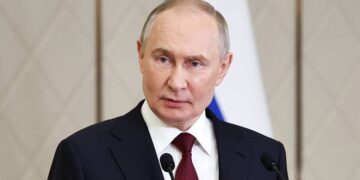
Just before Zelenskiy and his delegation arrived at Mar-a-Lago, Trump held a phone call with Russian President Vladimir Putin, which Trump described as “productive” and which Kremlin foreign policy aide Yuri Ushakov called “friendly.”
Ushakov said Putin told Trump that a 60-day ceasefire proposed by the European Union and Ukraine would only prolong the war, and added that Ukraine must make a decision on the Donbas “without further delay.”
Trump said the call with Putin lasted more than two hours and that the Russian leader had pledged to help rebuild Ukraine, including by providing cheap energy. “Russia wants to see Ukraine succeed,” Trump said. “It sounds a little strange.”
As Trump spoke positively about Putin, Zelenskiy tilted his head and smiled.
Trump said he planned to speak with Putin again after his meeting with Zelenskiy.
The Kremlin voiced support for Trump’s diplomatic efforts.
“The whole world appreciates President Trump and his team’s peace efforts,” Putin’s special envoy Kirill Dmitriev wrote on X early Monday following Trump’s talks with Zelenskiy.
NUCLEAR PLANT DISCUSSED
U.S. negotiators have also suggested joint control of the Zaporizhzhia nuclear power plant. The International Atomic Energy Agency said on Sunday that repairs to power lines there have begun after another local ceasefire it helped broker.
Trump said negotiators had made progress on deciding the plant’s future and noted that it could “start up almost immediately.” He added that “it’s a big step” that Russia has not bombed the facility.
Russia currently controls all of Crimea, which it annexed in 2014, and since launching its invasion of Ukraine nearly four years ago, it has taken about 12% of Ukrainian territory. That includes roughly 90% of Donbas, 75% of the Zaporizhzhia and Kherson regions, and smaller areas of the Kharkiv, Sumy, Mykolaiv and Dnipropetrovsk regions, according to Russian estimates.
A day before Zelenskiy’s arrival in Florida, Russian forces launched hundreds of missiles and drones at Kyiv and other parts of Ukraine, disrupting power and heating supplies in parts of the capital. Zelenskiy said the attacks were Russia’s response to U.S.-brokered peace efforts, though Trump said on Sunday that he believed both Putin and Zelenskiy were genuinely seeking peace.
After Saturday’s strikes, Putin said Russia would continue the war if Kyiv did not pursue a swift peace. Russian forces have made steady gains in recent months, claiming additional settlements on Sunday.
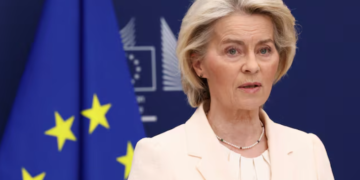
European leaders joined parts of Sunday’s meeting by phone. European Commission President Ursula von der Leyen said on X that “Europe is ready to keep working with Ukraine and our US partners,” stressing that strong security guarantees would be of “paramount” importance.
A spokesperson for British Prime Minister Keir Starmer said European leaders “underlined the importance of robust security guarantees and reaffirmed the urgency of ending this barbaric war as soon as possible.”