















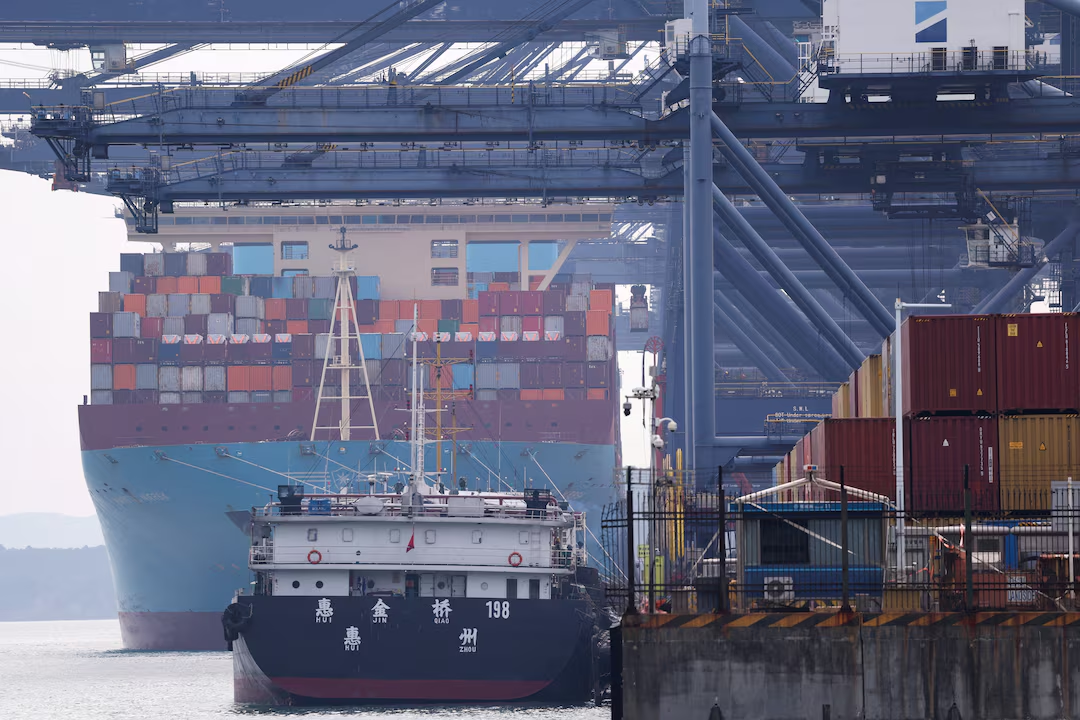














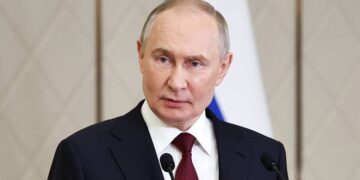


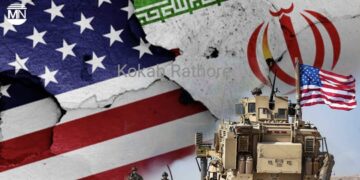















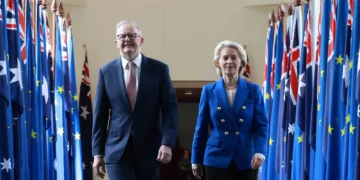



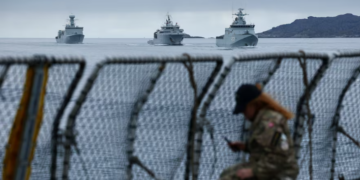


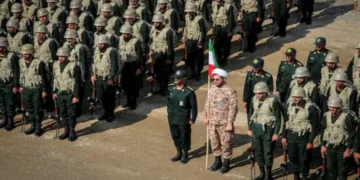










WASHINGTON/BRUSSELS/PARIS: Rising tensions between Donald Trump and European allies over the Iran war have pushed NATO into one of its most serious crises in decades. Trump has expressed anger over European countries refusing to deploy naval forces to secure the Strait of Hormuz after the U.S.-Israeli conflict with Iran escalated on February 28. He has even suggested the possibility of withdrawing the United States from NATO, raising concerns about the alliance’s future.

Analysts and diplomats warn that even without a formal withdrawal, Trump could weaken NATO by choosing not to defend member states. This has shaken confidence in the alliance’s core principle of collective defense. European officials, who have long relied on NATO for security—especially against Russia—are increasingly preparing for a scenario where the U.S. plays a reduced role.
Mark Rutte had earlier dismissed such concerns, but attitudes are now shifting across Europe.U.S. officials argue NATO cannot be a “one-way street,” criticizing allies for not offering sufficient support in current conflicts. European leaders respond that Washington has not clearly requested specific assistance and has been inconsistent in its expectations.
Tensions have also been fueled by broader disagreements, including U.S. positions on Russia and recent diplomatic friction between American and European officials.
Although U.S. law makes it difficult for a president to formally exit NATO without Senate approval, Trump still has authority over military decisions, which could effectively undermine the alliance.
Despite some officials downplaying the situation as temporary, many analysts believe NATO is entering a new phase. Even if the alliance survives, the long-standing transatlantic partnership may be fundamentally reshaped.