










































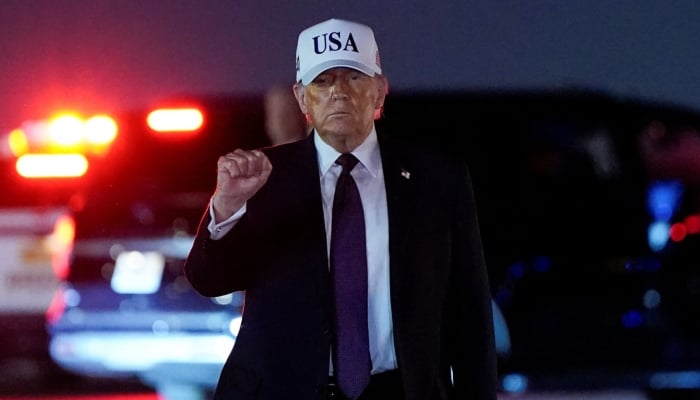
NEWS DESK (MNN); U.S. President Donald Trump has demanded Iran’s “unconditional surrender,” dramatically escalating his stance a week into the war launched jointly by the United States and Israel against Tehran, a move that analysts warn could complicate efforts to reach a quick diplomatic settlement.

Trump made the statement in a post on social media on Friday, declaring that negotiations with Iran would only be possible if Tehran surrendered completely.
“There will be no deal with Iran except UNCONDITIONAL SURRENDER!” Trump wrote. “After that, and the selection of a great and acceptable leader, we and our allies will work to bring Iran back from the brink of destruction and make it economically stronger than ever.”
The statement came just hours after Iran’s President Masoud Pezeshkian suggested that some countries had begun mediation efforts aimed at ending the conflict, providing the first indication of diplomatic engagement since the war began.
While Pezeshkian did not identify the countries involved, he emphasized that Iran remained committed to peace but would firmly defend its sovereignty.
“Some countries have begun mediation efforts,” he wrote on social media. “We are committed to lasting peace in the region but will not hesitate to defend the dignity and authority of our nation.”
The war began after U.S. and Israeli forces launched large-scale strikes on Iran on February 28, killing Iranian Supreme Leader Ayatollah Ali Khamenei on the first day of the campaign. The conflict has since expanded across the region, triggering retaliatory missile and drone attacks and raising fears of a wider Middle East war.
Trump’s latest comments also included a controversial demand that Washington should have the right to help choose Iran’s next supreme leader. The position is traditionally selected by a council of senior Shi’ite clerics, making the demand a significant intervention in Iran’s internal political process.
A White House spokesperson confirmed that U.S. intelligence agencies were already examining possible candidates for Iran’s future leadership but declined to provide details.
On the battlefield, Israel intensified its military operations, launching fresh attacks on Iran as well as neighbouring Lebanon. Israeli forces carried out heavy airstrikes on Beirut after ordering residents to evacuate large areas of the southern suburbs of the Lebanese capital.
Israel said the strikes targeted command centres used by Iran’s Revolutionary Guard naval units and facilities linked to the Hezbollah militant group.
Hezbollah, the powerful Shi’ite militia allied with Iran, had earlier launched rocket attacks on Israel in retaliation for the killing of Khamenei.
The bombardment forced hundreds of thousands of civilians to flee their homes. According to the Norwegian Refugee Council, around 300,000 people have been displaced in Lebanon in just four days.
Many displaced residents were seen sleeping on streets, beaches and in parked vehicles.
“We’re sleeping here in the streets — some in cars, some on the pavement,” said Jamal Seifeddin, a Beirut resident who fled his home in the southern suburbs. “No one even brought a blanket.”
Meanwhile, Israel continued its offensive inside Iran, claiming that around 50 warplanes struck a bunker believed to be used by Iranian leadership beneath the destroyed Tehran compound of Khamenei.
Israeli officials say their military campaign has significantly weakened Iran’s defence capabilities. According to the Israeli military, around 80 percent of Iran’s air-defence systems and more than 60 percent of its missile launchers have been destroyed during the first week of the war.
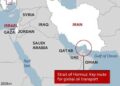
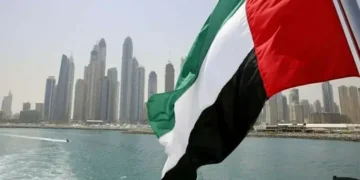
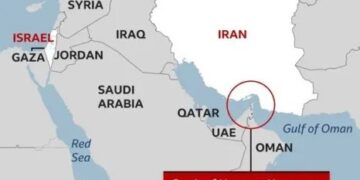
Despite these claims, Iran has continued to fire missiles and drones toward Israeli territory as well as Gulf countries hosting U.S. military bases, including the United Arab Emirates, Qatar, Bahrain, Kuwait and Saudi Arabia.
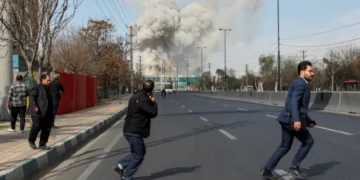
Explosions were heard across several Israeli cities as the country’s air-defence systems attempted to intercept incoming projectiles.
The conflict has also drawn in global powers. A report in the Washington Post said Russia had been providing Iran with intelligence on the location of U.S. warships and aircraft in the region after Iran’s surveillance capabilities were severely damaged during the initial strikes.
Russian diplomatic missions in the United States did not immediately respond to requests for comment.
Meanwhile, the White House said President Trump and U.S. Defence Secretary Pete Hegseth were scheduled to meet major defence contractors to discuss accelerating weapons production as the war has rapidly depleted military stockpiles.
Officials said U.S. military planners expect the current phase of operations against Iran to last between four and six weeks.
The conflict has already had devastating humanitarian consequences. According to the Iranian Red Crescent Society, at least 1,230 people have been killed in Iran since the attacks began.
In Lebanon, the health ministry reported 123 deaths and more than 680 injuries from Israeli strikes.
Inside Israel, Iranian missile attacks have killed at least 11 people since the start of the war.
The war has also sparked controversy after reports that a U.S. airstrike may have hit an Iranian girls’ school on the first day of the conflict, killing dozens of children. Two U.S. officials said military investigators were examining the incident but had not yet reached a final conclusion.
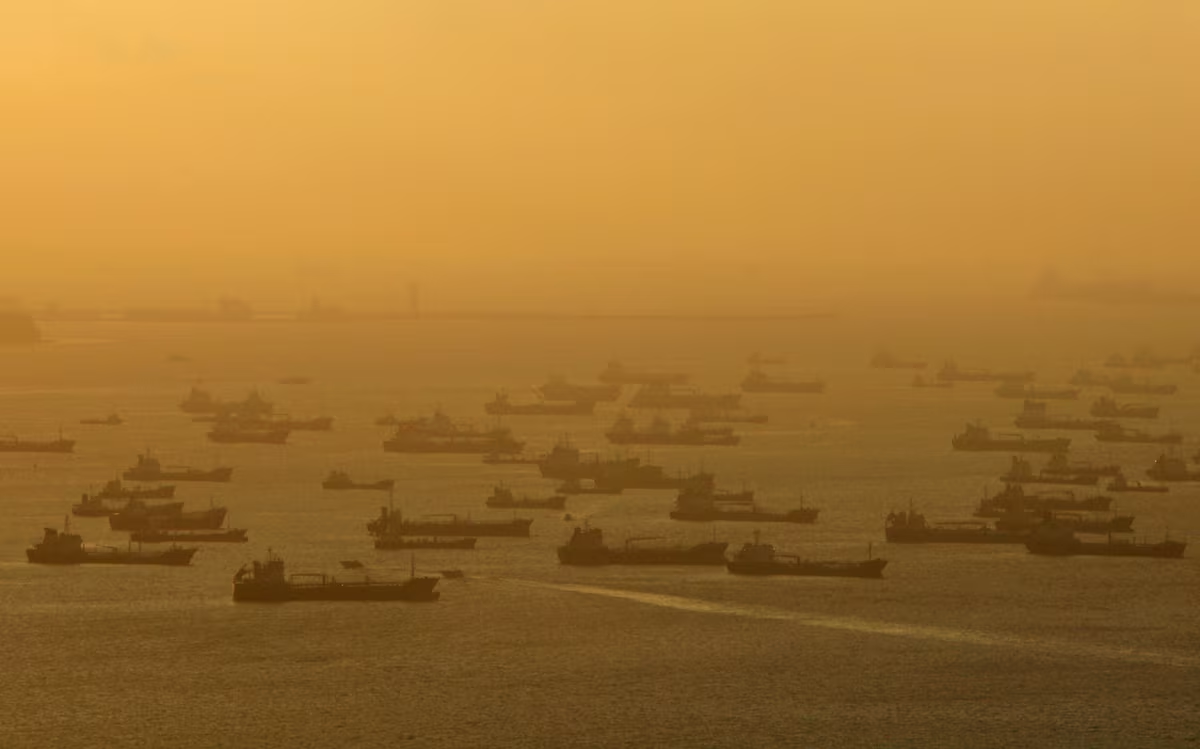
As the fighting intensifies and diplomatic efforts remain uncertain, the war continues to threaten regional stability and global economic security.