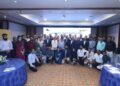








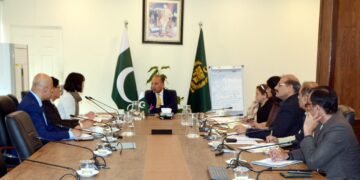
































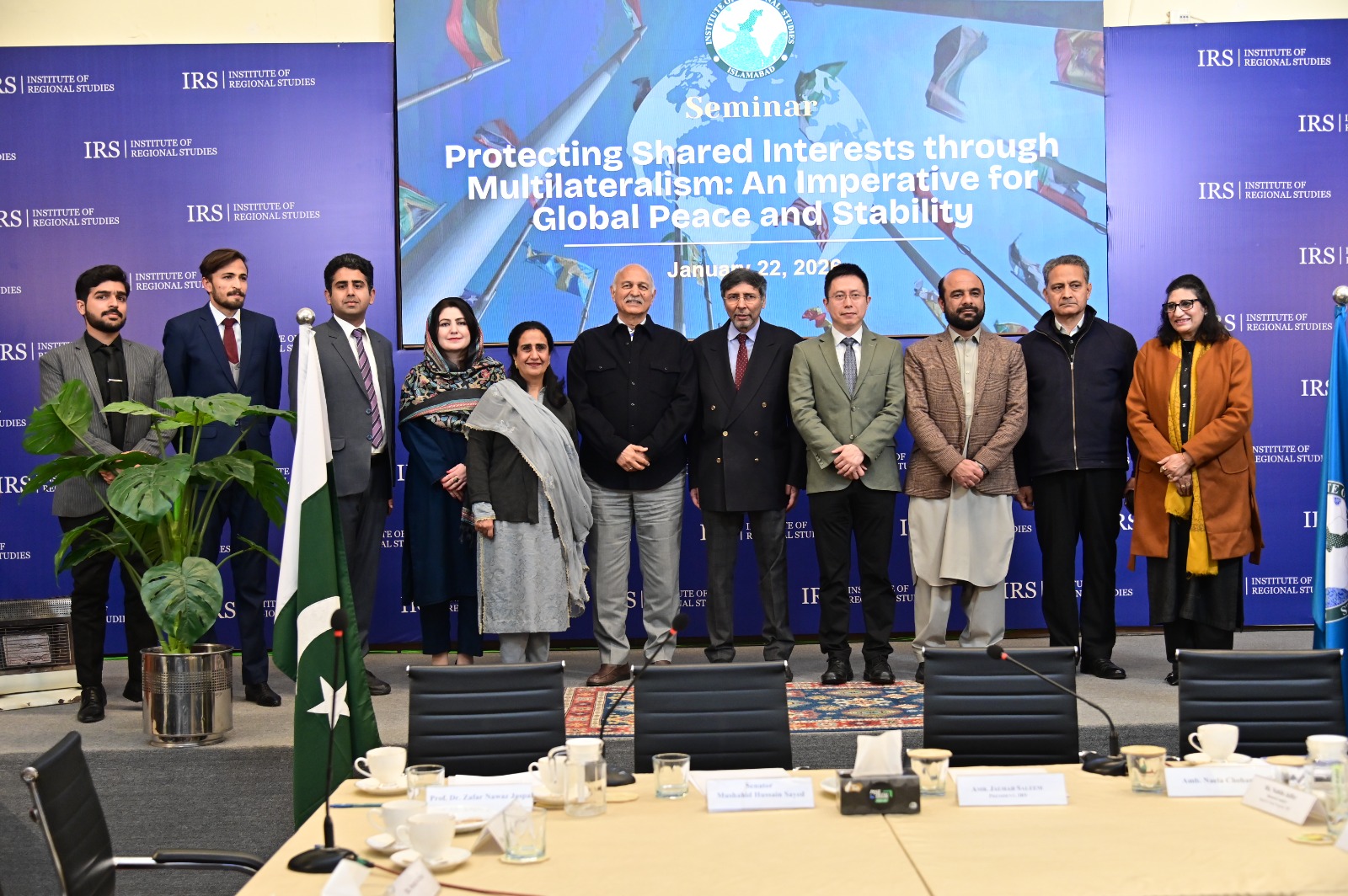
ISLAMABAD: The China Program at the Institute of Regional Studies (IRS), Islamabad, hosted a panel discussion titled “Protecting Shared Interests through Multilateralism: An Imperative for Global Peace and Stability.”

The event brought together ambassadors, academics, policy analysts, and media professionals to examine the significance of reinforcement of multilateralism in the contemporary fragmented world order marked by geopolitical tensions, unilateral actions, and rising great power competition, as well as China-led initiatives based on the UN principles, in addressing geopolitical fragmentation, development gaps, and conflict management.
The discussion was opened by Ms. Nabila Jaffer, Lead of the China Program at IRS, with a brief introduction of the speakers, and contextualized the dialogue by emphasizing the growing relevance of multilateralism in protecting shared interests for global peace and stability. In his welcome remarks, Amb. Jauhar Saleem, President IRS, outlined the fragmented and weakening international institutions and the global world order. He noted the increasing unilateral action leading to the use of force by the traditional powers. He went on to explain the need of the hour, which is the use of peaceful dialogue and the reformation of the United Nations. He also added that the increasing tendency of the powerful states to undermine international institutions and disregard established norms under the notion of might is right.
Amb. Saleem also stated that not only the US but India, which is not even a great power yet, is bent upon violating every international norm, every international rule, and every tenet of the UN Charter.
In the keynote address, Senator Mushahid Hussain Sayed, Honourable Chairman Pakistan-China Institute, Islamabad, highlighted the importance of multilateral engagements Calling them the trend of history and imperative. He compared the Chinese and American approaches towards the global governance system. He called China the flag-bearer of multilateralism whilst listing US Unilateral attempts which subvert the rules-based international order. He also applauded the Chinese initiatives, calling them the core concepts of the existing international order.
Moreover, the Senator added that Pakistan has always urged mediation as a way out for conflict resolution, as multilateralism is the foundational pillar of Pakistan’s foreign policy since its inception. He urged that multilateralism is no longer a policy option but a strategic necessity.
The impact of unilateral actions on the global order results in its weakness and a rise of polarization, Amb. Naela Chohan, Former Ambassador of Pakistan. She highlighted the Indian military aggression against Pakistan, the Russia-Ukraine War, the U.S. action in Venezuela, and the tariff wars as a few glaring examples of unilateral decisions wreaking havoc on peace and stability. She said that the contemporary order is on its last legs. The ambassador viewed the Chinese alternatives as more inclusive and that it strengthens regional and international institutions, which have helped multilateral diplomacy regain importance.
Professor Zafar Nawaz Jaspal, Meritorious Professor and Dean of the Faculty of Social Sciences at Quaid-I-Azam University, Islamabad, shed light on strategic and great power competition and called them a cause of concern as they threaten peace. This competition is not between the great powers alone but has seeped into the middle powers as well. He reiterated the comment made by the UN Secretary General,” Leaders run over international law and they undermine international order”. He highlighted the role of China’s initiatives in prompting states to work together to strengthen both regional and international organisations. He warned the global policy experts about increased polarisation in Pakistan’s neighbourhood, furthering disorder.
From a Chinese perspective, Prof. Qian Feng, Director Research Department at the National Strategy Institute, Tsinghua University, China, elaborated on China’s evolution from a normative supporter of multilateralism to a key stakeholder in defending the rules-based international order enshrined in the UN Charter. China’s approach seeks to accommodate diverse perspectives and promote equity-based global governance frameworks. He highlighted China’s position on multilateral institutions based on the important principles of universal security, inclusivity, and a shared future for mankind as opposed to unilateralism and protectionism.
Moreover, Dr Manzoor Khan Afridi, Professor and Dean of the Faculty of Social Sciences, International Islamic University, Islamabad, discussed multilateralism from the perspective of the Global South. He underscored Chinese efforts at reclaiming multilateralism, citing the SCO as the success story that shows the pathway to progress is global cooperation. Moreover, he claimed that the Global South has benefited from China’s initiatives, leading to lasting, sustainable development. He also criticised confrontation and unilateral interventions, such as those in Venezuela, for weakening multilateral cooperation and exacerbating structural inequalities.
Similarly, Dr Noor Fatima, Associate Professor and Chairman of the Department of Politics and International Relations, International Islamic University, Islamabad, underscored that people’s centric nature of the Chinese initiatives is providing legitimacy to Beijing to advocate for multilateralism.
According to her, China’s initiatives are grounded in human security and development, which are prerequisites to multilateral cooperation. She applauded that China’s multilateralism is not ideological or geographical, but is aimed at improving human security inclusively. The professor commended China for aptly perceiving and calling for the reforms of the global governance structure amidst global uncertainty and shifts in the balance of power. She further added that China’s approach is pluralist and inclusive, promoting participation, capacity building, and reaching tangible outcomes. Dr Talat Shabbir, Director China-Pakistan Study Centre, Institute of Strategic Studies, Islamabad, remarked on multilateral mediation and conflict resolution, highlighting the importance of preventive diplomacy rather than reactive, crisis-driven approaches.
Dr. Shabbir added that China’s inclusive governance model and its four major global initiatives, GGI, GCI, GDI, and GSI, are deeply rooted in the principles of multilateralism. He noted that the system is witnessing erosion of trust in international institutions; Veto politics, and selective engagement necessitate new and inclusive mediation bodies. He concluded that mediation is a collective responsibility and should be reinvented to meet the realities of the contemporary world. At the end, Mr. Wang Shengjie, Counsellor, Embassy of the People’s Republic of China, Islamabad, provided China’s comprehensive viable alternative to unilateralism. He suggested that to adapt to current turbulence in the world, states should not choose sides based on ideological lines, but rather they should preserve their cultural identity and explore development paths suited to their own domestic conditions. He added that Chinese multilateralism, which is aligned with the core tenets of the UN charter, operates on four aspects: 1) sovereign equality, opposition to hegemony, 2) openness and inclusiveness, opposition to cliques, 3) rules-oriented, opposition to exceptionalism, and lastly 4) focusing on action, opposition to empty talks. He emphasised that Pakistan–China relations are a strong example of mutual trust and shared well-being, noting that multilateralism is a collective journey grounded in international equity and shared global responsibility. He concluded by adding that, being a middle power, Pakistan has a middle wayd, Jan 22, 2026 — The China Program at the Institute of Regional Studies (IRS), Islamabad, hosted a panel discussion titled “Protecting Shared Interests through Multilateralism: An Imperative for Global Peace and Stability.”
The event brought together ambassadors, academics, policy analysts, and media professionals to examine the significance of reinforcement of multilateralism in the contemporary fragmented world order marked by geopolitical tensions, unilateral actions, and rising great power competition, as well as China-led initiatives based on the UN principles, in addressing geopolitical fragmentation, development gaps, and conflict management.
The discussion was opened by Ms. Nabila Jaffer, Lead of the China Program at IRS, with a brief introduction of the speakers, and contextualized the dialogue by emphasizing the growing relevance of multilateralism in protecting shared interests for global peace and stability. In his welcome remarks, Amb. Jauhar Saleem, President IRS, outlined the fragmented and weakening international institutions and the global world order. He noted the increasing unilateral action leading to the use of force by the traditional powers. He went on to explain the need of the hour, which is the use of peaceful dialogue and the reformation of the United Nations. He also added that the increasing tendency of the powerful states to undermine international institutions and disregard established norms under the notion of might is right. Amb. Saleem also stated that not only the US but India, which is not even a great power yet, is bent upon violating every international norm, every international rule, and every tenet of the UN Charter. In the keynote address, Senator Mushahid Hussain Sayed, Honourable Chairman Pakistan-China Institute, Islamabad, highlighted the importance of multilateral engagements Calling them the trend of history and imperative. He compared the Chinese and American approaches towards the global governance system. He called China the flag-bearer of multilateralism whilst listing US Unilateral attempts which subvert the rules-based international order. He also applauded the Chinese initiatives, calling them the core concepts of the existing international order. Moreover, the Senator added that Pakistan has always urged mediation as a way out for conflict resolution, as multilateralism is the foundational pillar of Pakistan’s foreign policy since its inception. He urged that multilateralism is no longer a policy option but a strategic necessity. The impact of unilateral actions on the global order results in its weakness and a rise of polarization,
Amb. Naela Chohan, Former Ambassador of Pakistan. She highlighted the Indian military aggression against Pakistan, the Russia-Ukraine War, the U.S. action in Venezuela, and the tariff wars as a few glaring examples of unilateral decisions wreaking havoc on peace and stability. She said that the contemporary order is on its last legs. The ambassador viewed the Chinese alternatives as more inclusive and that it strengthens regional and international institutions, which have helped multilateral diplomacy regain importance. Professor Zafar Nawaz Jaspal, Meritorious Professor and Dean of the Faculty of Social Sciences at Quaid-I-Azam University, Islamabad, shed light on strategic and great power competition and called them a cause of concern as they threaten peace. This competition is not between the great powers alone but has seeped into the middle powers as well. He reiterated the comment made by the UN Secretary General,” Leaders run over international law and they undermine international order”. He highlighted the role of China’s initiatives in prompting states to work together to strengthen both regional and international organisations. He warned the global policy experts about increased polarisation in Pakistan’s neighbourhood, furthering disorder. From a Chinese perspective, Prof. Qian Feng, Director Research Department at the National Strategy Institute, Tsinghua University, China, elaborated on China’s evolution from a normative supporter of multilateralism to a key stakeholder in defending the rules-based international order enshrined in the UN Charter. China’s approach seeks to accommodate diverse perspectives and promote equity-based global governance frameworks. He highlighted China’s position on multilateral institutions based on the important principles of universal security, inclusivity, and a shared future for mankind as opposed to unilateralism and protectionism.
Moreover, Dr Manzoor Khan Afridi, Professor and Dean of the Faculty of Social Sciences, International Islamic University, Islamabad, discussed multilateralism from the perspective of the Global South. He underscored Chinese efforts at reclaiming multilateralism, citing the SCO as the success story that shows the pathway to progress is global cooperation. Moreover, he claimed that the Global South has benefited from China’s initiatives, leading to lasting, sustainable development.
He also criticised confrontation and unilateral interventions, such as those in Venezuela, for weakening multilateral cooperation and exacerbating structural inequalities. Similarly, Dr Noor Fatima, Associate Professor and Chairman of the Department of Politics and International Relations, International Islamic University, Islamabad, underscored that people’s centric nature of the Chinese initiatives is providing legitimacy to Beijing to advocate for multilateralism. According to her, China’s initiatives are grounded in human security and development, which are prerequisites to multilateral cooperation. She applauded that China’s multilateralism is not ideological or geographical, but is aimed at improving human security inclusively. The professor commended China for aptly perceiving and calling for the reforms of the global governance structure amidst global uncertainty and shifts in the balance of power. She further added that China’s approach is pluralist and inclusive, promoting participation, capacity building, and reaching tangible outcomes.
Dr Talat Shabbir, Director China-Pakistan Study Centre, Institute of Strategic Studies, Islamabad, remarked on multilateral mediation and conflict resolution, highlighting the importance of preventive diplomacy rather than reactive, crisis-driven approaches. Dr. Shabbir added that China’s inclusive governance model and its four major global initiatives, GGI, GCI, GDI, and GSI, are deeply rooted in the principles of multilateralism. He noted that the system is witnessing erosion of trust in international institutions; Veto politics, and selective engagement necessitate new and inclusive mediation bodies. He concluded that mediation is a collective responsibility and should be reinvented to meet the realities of the contemporary world.
At the end, Mr. Wang Shengjie, Counsellor, Embassy of the People’s Republic of China, Islamabad, provided China’s comprehensive viable alternative to unilateralism. He suggested that to adapt to current turbulence in the world, states should not choose sides based on ideological lines, but rather they should preserve their cultural identity and explore development paths suited to their own domestic conditions.
He added that Chinese multilateralism, which is aligned with the core tenets of the UN charter, operates on four aspects: 1) sovereign equality, opposition to hegemony, 2) openness and inclusiveness, opposition to cliques, 3) rules-oriented, opposition to exceptionalism, and lastly 4) focusing on action, opposition to empty talks. He emphasised that Pakistan–China relations are a strong example of mutual trust and shared well-being, noting that multilateralism is a collective journey grounded in international equity and shared global responsibility. He concluded by adding that, being a middle power, Pakistan has a middle way.