



















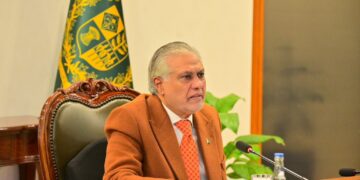











ISLAMABAD (MNN); Prime Minister Shehbaz Sharif on Wednesday confirmed that multiple countries are actively engaged in discussions with Pakistan regarding the acquisition of its fighter jets.

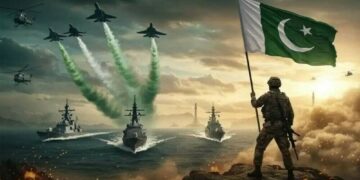
Speaking during a federal cabinet meeting, the prime minister said interest in Pakistan’s fighter aircraft had increased following the country’s military success last year, a reference to the four-day conflict with India in May 2025. He noted that the growing demand would strengthen Pakistan’s defence production sector and provide a boost to the national economy.
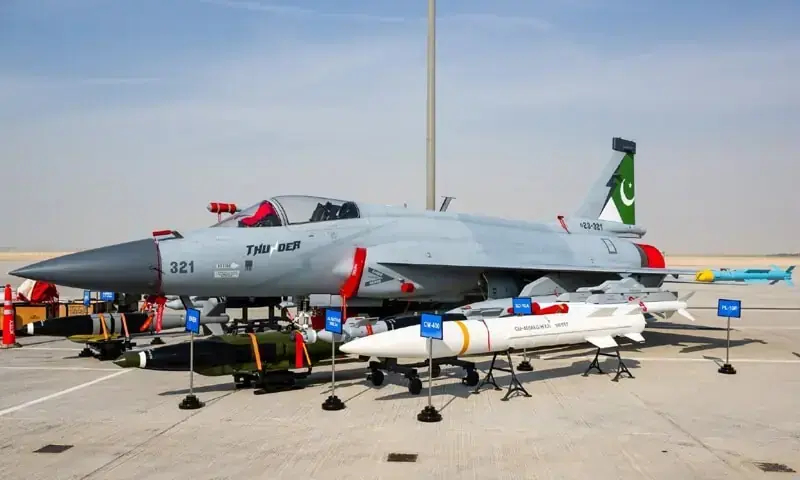
Recent reports have suggested that Pakistan is in talks with several friendly nations over the export of the JF-17 Thunder, a light combat aircraft jointly developed by Pakistan and China and manufactured locally.
Earlier, Defence Production Minister Raza Hayat Harraj told BBC Urdu that negotiations were underway with multiple countries for the sale of JF-17 jets. He said many states had expressed interest, but declined to name them or disclose the level of talks, describing such details as sensitive.
Harraj said the export of the jets would be made public once agreements were finalised, adding that these matters were closely guarded for national security reasons. He stressed that Pakistan would only sell the aircraft to friendly countries to ensure they are not used against its own interests.
The minister said China remains a partner in any such deal, as the aircraft is jointly developed. He added that the JF-17’s performance during last year’s conflict with India was closely observed by air forces worldwide and widely praised.
Highlighting the cost factor, Harraj said fighter jets of similar capability globally are priced between $250 million and $350 million, whereas the JF-17 Thunder is significantly more affordable. He said the jet’s price ranges between $40 million and $50 million, depending on specifications.
On questions about revenue sharing with China, the minister said all such aspects are discussed jointly and that China’s role and rights are fully recognised.
Responding to queries about Pakistan’s production capacity, Harraj declined to provide details, citing national defence considerations. He said manufacturing such advanced aircraft takes time, with some components produced in Pakistan and others in China.
Analyst Einar Tangen of China’s Centre for International Governance Innovation told BBC Urdu that much of the technology involved is likely controlled by China, making any export agreement a joint decision, with Beijing playing a leading role.
In recent developments, the air chiefs of Pakistan and Bangladesh held talks on the possible procurement of JF-17s. Pakistan Air Force Chief Air Chief Marshal Zaheer Ahmed Babar Sidhu also visited Iraq this week, where Iraqi officials showed keen interest in the aircraft.
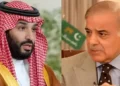
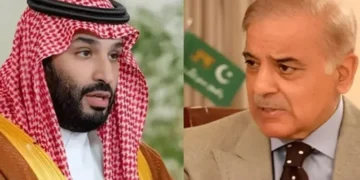
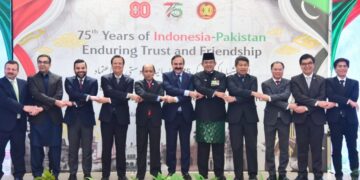
Reuters earlier reported that Pakistan and Saudi Arabia were discussing the conversion of around $2 billion in Saudi loans into a JF-17 deal. Meanwhile, Indonesia’s defence minister recently visited Pakistan and expressed interest in expanding defence cooperation.
Regarding defence ties with Saudi Arabia and Turkiye, Harraj did not share details of a defence pact signed with Riyadh in September 2025. Bloomberg has reported that Turkiye is also seeking to join the agreement, reflecting growing strategic cooperation among Pakistan, China, Saudi Arabia, Turkiye and Azerbaijan.