


























































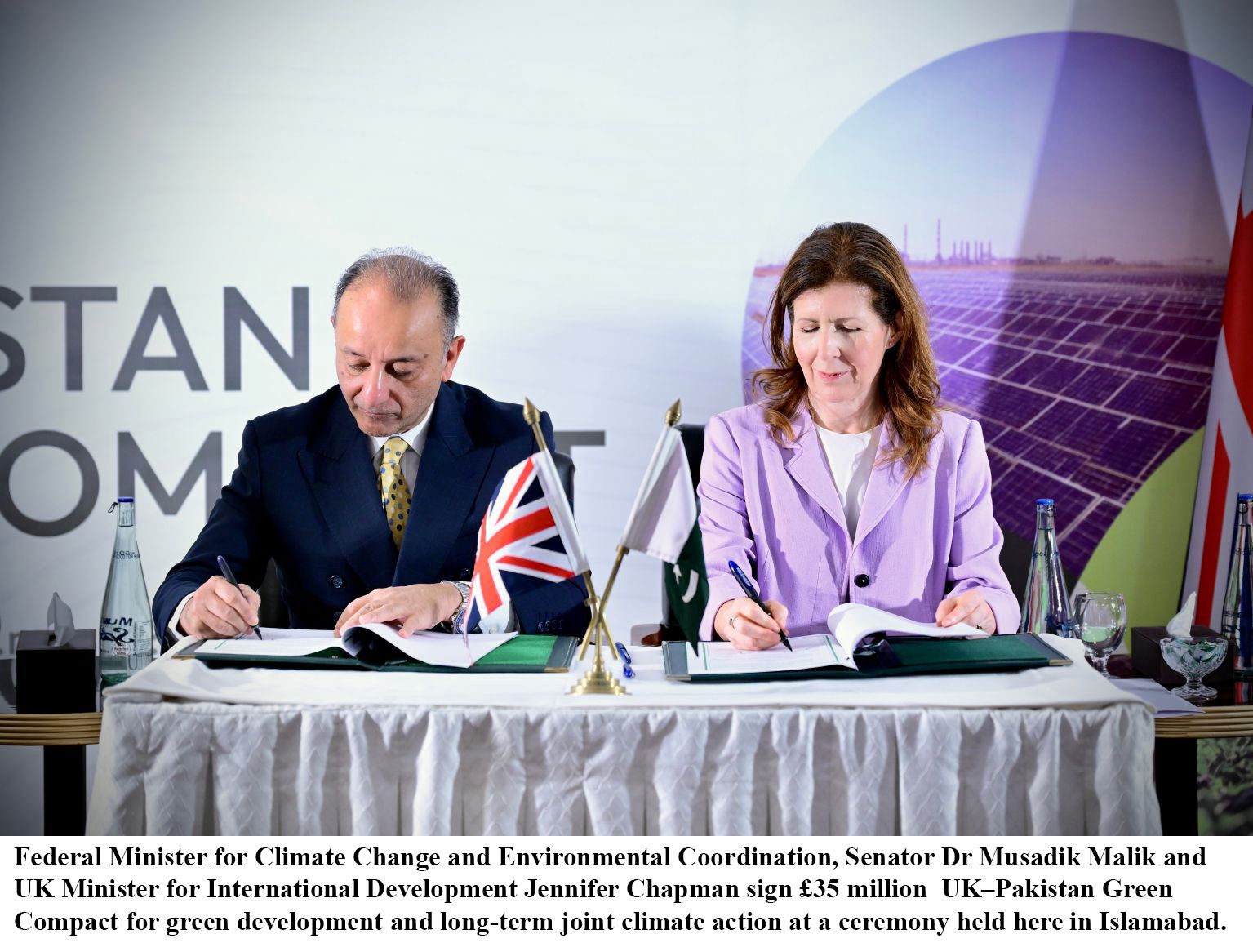
ISLAMABAD (MNN); Pakistan and the United Kingdom formalised a wide-ranging climate partnership with the launch of the UK–Pakistan Green Compact, a framework aimed at strengthening climate resilience, accelerating the clean energy transition and scaling up nature-based solutions, particularly mangrove conservation.

Mohammad Saleem Shaikh, media spokesperson and climate change policy advocacy specialist at the Ministry of Climate Change and Environmental Coordination, said the initiative marked a “decisive move towards action-oriented climate cooperation”.
“The UK–Pakistan Green Compact translates years of engagement into practical delivery. For Pakistan, which faces recurrent floods, heatwaves and water stress, implementation over the next decade will be critical,” he said.
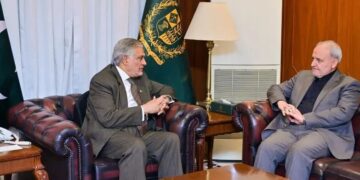
The agreement, signed recently in Islamabad by Federal Minister for Climate Change and Environmental Coordination Dr Musadik Malik and UK Minister for International Development Jennifer Chapman, unlocks £35 million in targeted support for green development and long-term climate action.
Officials from both sides described the Compact as a shift from policy dialogue to implementation at a time when climate risks are intensifying across South Asia, with Pakistan among the most climate-vulnerable countries in the region.
According to Mr Shaikh, the Compact is built around five core pillars: climate finance and investment, clean energy transition, nature-based solutions, innovation and youth empowerment, and adaptation and resilience.
“Under the jointly agreed framework, the UK will work with Pakistan to mobilise both public and private climate finance, strengthen regulatory frameworks for green investment and help develop a pipeline of bankable climate projects,” he said.
Clean energy forms a central component of the partnership. Pakistan aims to expand solar and wind generation to reduce reliance on fossil fuels, improve energy security and stabilise power costs.
Mr Shaikh noted that global market trends had made renewable energy increasingly viable. “Solar power is now significantly cheaper than fossil fuels, while wind energy has become even more competitive. This creates a strong economic case for accelerating Pakistan’s renewable transition,” he said.
Nature-based solutions are another key focus, with large-scale mangrove restoration planned to protect coastal communities from storm surges and erosion, while enhancing biodiversity and carbon sequestration.
“Mangroves act as natural shields against climate shocks. Their restoration strengthens coastal resilience while delivering environmental and economic benefits,” the ministry official said.
Innovation and youth engagement will also be prioritised under the Compact. The partnership envisages mentoring, technical assistance and access to investors for climate-smart startups and young innovators, aimed at expanding opportunities within the green economy.
Mr Shaikh said youth-led initiatives were increasingly being viewed as central to Pakistan’s climate response. “This partnership recognises that young innovators must be at the heart of future climate solutions,” he added.
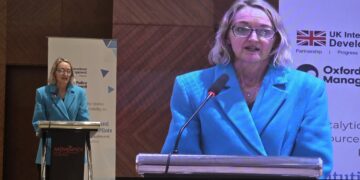
UK Minister Jennifer Chapman, during her first official visit to Pakistan, underscored the shared urgency of climate action, noting that climate impacts were being felt across the world.
“From melting glaciers to emptying rivers, the scale of the challenge here is striking,” she said at the launch event, warning that the cost of inaction would far outweigh the investments required today.
She highlighted UK support in areas including renewable energy expansion, mangrove and ecosystem restoration, early-warning systems, climate budgeting and improving international investment flows into Pakistan.
Mr Shaikh described the Compact as “a strategic turning point” in Pakistan–UK relations on climate change. “This is not just about funding. It is about building systems that last — from early-warning mechanisms and community preparedness to clean energy markets and youth-led innovation,” he said.
He added that translating commitments into action over the next ten years would be essential if Pakistan was to meet its national climate targets.
The UK remains one of Pakistan’s largest development partners, with ongoing cooperation in education, health, climate resilience and governance. Officials said the Green Compact builds on this foundation while introducing new mechanisms for private-sector engagement and academic exchanges to strengthen skills and research collaboration.
The Ministry official Saleem Shaikh also pointed to the agreement’s wider diplomatic significance, recalling that the UK’s COP26 presidency led to the Glasgow Climate Pact, while Pakistan, as chair of the G77 at COP27, played a key role in establishing the Loss and Damage Fund.
“As climate impacts from floods, heatwaves and droughts intensify, both governments see this Compact as a long-term partnership rather than a one-off initiative,” he said.
“This partnership brings together expertise, influence and determination. If implemented effectively, it can safeguard vulnerable communities and position Pakistan as a credible destination for green investment,” Mr Shaikh added.