





















































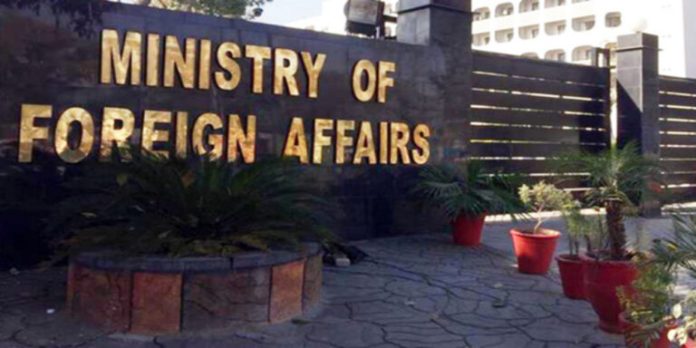
ISLAMABAD: Pakistan’s Foreign Office (FO) on Saturday rejected statements made by Indian External Affairs Minister Dr. S. Jaishankar, labeling them as “irresponsible assertions.”

In a statement, the FO said, “New Delhi is once again attempting to deflect attention from its own troubling record as a neighbour that promotes terrorism and undermines regional stability.” While the FO did not directly reference Jaishankar’s remarks, the statement followed Indian media reports quoting him asserting that India has the right to defend itself against terrorism while pointing to “bad neighbours.”
The statement comes days after Jaishankar met National Assembly Speaker Ayaz Sadiq in Bangladesh, where multiple officials from different countries were present.
According to the NA, Jaishankar shook hands with Sadiq, introduced himself, and acknowledged recognizing the speaker. Responding, Pakistan’s FO said: “Pakistan firmly rejects the irresponsible assertions made by the Indian external affairs minister. India’s documented involvement in promoting terrorist activities in the region, particularly in Pakistan, is well known.”
The statement cited the case of Commander Kulbhushan Jadhav as a “stark example of organised, state-sponsored terrorism directed against Pakistan.” It also highlighted “recurring instances of extraterritorial killings, sabotage through proxies, and covert support to terrorist networks,” linking these actions to the extremist ideology of Hindutva.
The FO further criticized India’s “illegal and violent military occupation of Jammu and Kashmir” and reaffirmed Pakistan’s commitment to supporting the Kashmiri people in their pursuit of self-determination, as outlined in UN Security Council resolutions. On the Indus Waters Treaty (IWT), the statement emphasized that it is an international agreement concluded in good faith and warned that “any unilateral violation by India would undermine regional stability and question its credibility as a state that claims to respect international law. Pakistan will take all necessary measures to safeguard its legitimate rights under the treaty.”