


























































UNITED NATIONS: Pakistan has strongly criticised India at the United Nations for weaponising water by unilaterally suspending the 1960 Indus Waters Treaty (IWT) over what Islamabad has termed “baseless” terrorism allegations, warning that New Delhi’s actions pose a direct threat to Pakistan’s agriculture, livelihoods and regional stability.

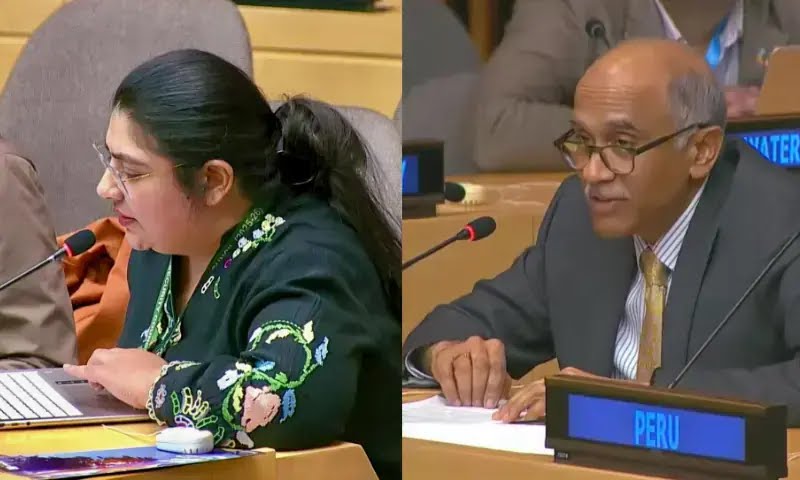
The sharp exchange between the two neighbouring countries took place at a high-level UN event held on Wednesday ahead of World Water Day, which falls on March 22, according to a statement issued by Pakistan’s UN mission.
Pakistan’s climate change minister addresses UN event
The confrontation followed a video message delivered by Minister of Climate Change Dr Musadik Malik, who stated that India’s decision to place the treaty “in abeyance” undermined decades of bilateral cooperation and violates international law. The Indus Waters Treaty, signed in 1960, has long been considered one of the most enduring water-sharing agreements in the world, governing the distribution of waters from the Indus River system between the two countries.
India links treaty suspension to terrorism allegations
Indian Permanent Representative to the UN, Ambassador Harish Parvathaneni, told the world body that New Delhi would continue to hold the treaty “in abeyance until Pakistan … credibly and irrevocably ends its support for all forms of terrorism.” Islamabad has already repeatedly rejected these allegations as baseless. Pakistan’s response at the forum made clear that it views India’s suspension of the treaty as a form of coercion, framing the move as a deliberate weaponisation of shared water resources.
The Pakistani side argued that such unilateral actions not only undermine the framework of international law but also threaten the livelihoods of millions who depend on the Indus River system for agriculture and sustenance.
The exchange underscores the growing tensions between the two nuclear-armed neighbours over the future of the Indus Waters Treaty, which has survived multiple wars and periods of heightened hostility since its signing more than six decades ago. India’s decision to place the treaty in abeyance has added a new dimension to the already fraught bilateral relationship, with Pakistan insisting that the suspension is legally unjustifiable and politically motivated.
The high-level UN event provided a global platform for both countries to air their positions on the matter, with Pakistan calling on the international community to take note of what it described as India’s violation of a binding international agreement