










































































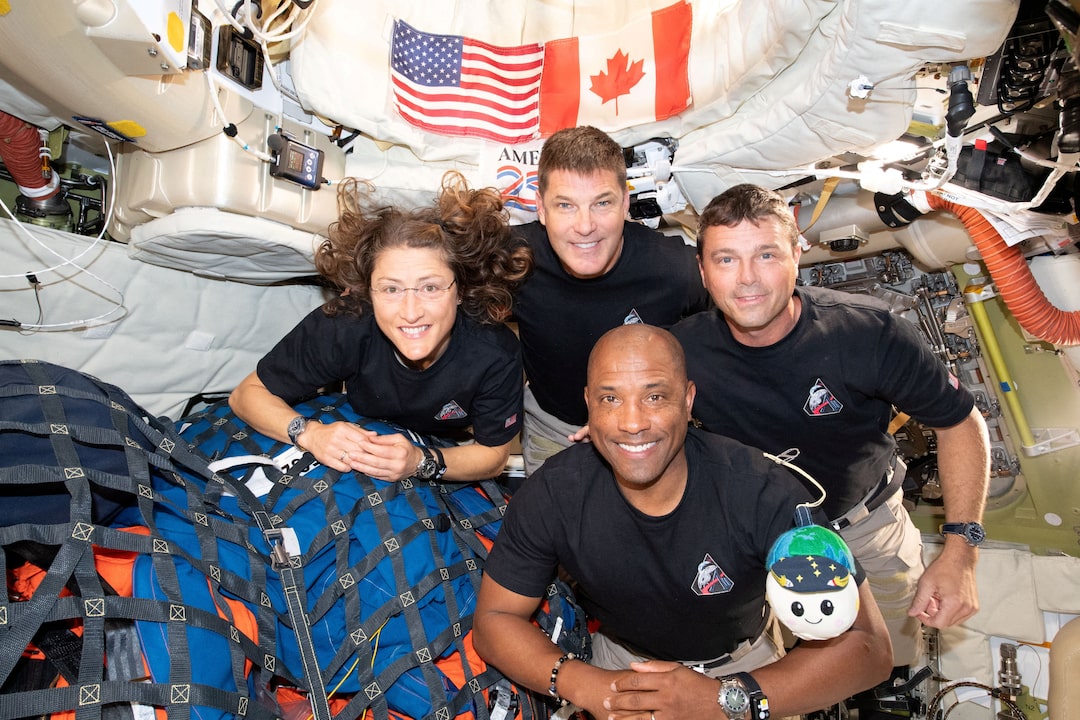
Reuters: Astronauts aboard NASA Artemis II mission are preparing for a high-stakes return to Earth after completing a historic journey around the far side of the Moon. Speaking during their first in-space press conference, the crew described the emotional weight of the mission as they approach a fiery atmospheric re-entry.

Travelling in NASA’s Orion spacecraft, the four-member crew is expected to splash down off the coast of Southern California on Friday evening, concluding a nearly 10-day mission that pushed human spaceflight farther than ever before. As the capsule re-enters Earth’s atmosphere, it will reach speeds of nearly 38,000 km/h, creating intense heat and friction that will test Orion’s heat shield in what astronauts describe as riding through a “fireball.” Pilot Victor Glover said he has been mentally preparing for this moment since being assigned to the mission.
Reflecting on the journey, he noted that the experience is still difficult to fully process, with many stories and memories yet to unfold. Commander Reid Wiseman, mission specialists Christina Koch and Jeremy Hansen joined Glover in becoming the farthest-travelling humans in history. The crew surpassed a decades-old record set during Apollo 13 mission, reaching approximately 252,000 miles from Earth.
Beyond its technical achievements, the mission carried deep emotional moments. Wiseman shared how the crew stayed connected with their families through brief calls, describing those exchanges as powerful and moving.
In a touching tribute, Hansen proposed naming a lunar crater after Wiseman’s late wife, a gesture that resonated deeply with both the crew and mission control teams. The Artemis programme, led by NASA, aims to return humans to the Moon and establish a long-term presence there.
Future missions will build on Artemis II’s success, with upcoming objectives including docking tests in Earth orbit and eventual crewed lunar landings—marking humanity’s first return to the Moon since Apollo 17 mission.
Scientists view Artemis II as a critical step toward understanding the origins of the solar system. With astronauts providing real-time observations during their lunar flyby, researchers gained valuable insights that complement decades of satellite-based studies.
As the crew prepares for re-entry, the mission stands as both a technological milestone and a deeply human journey—blending exploration, science, and personal stories from the edge of deep space.