












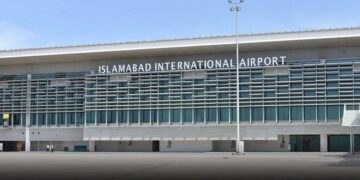

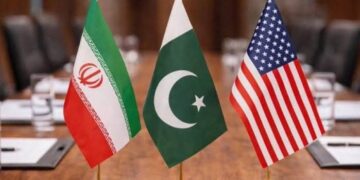














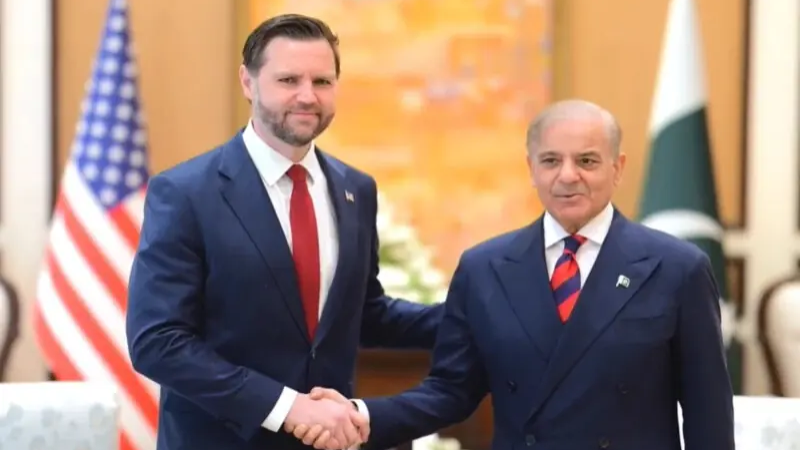
ISLAMABAD: Prime Minister Shehbaz Sharif held separate meetings with delegations from the United States and Iran on Saturday, formally launching the much-anticipated “Islamabad Talks” aimed at achieving durable peace in the region.

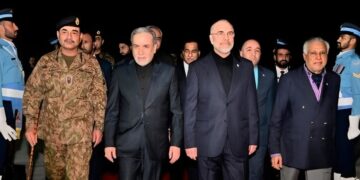
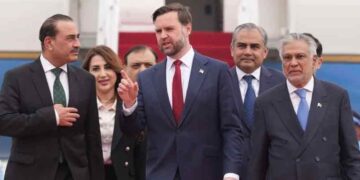
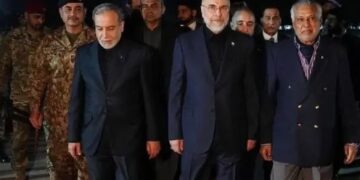
The US delegation is led by Vice President JD Vance and includes senior officials such as Jared Kushner and Steve Witkoff. On the Iranian side, the delegation is headed by Parliament Speaker Mohammad Bagher Ghalibaf, accompanied by Foreign Minister Abbas Araghchi.
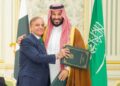
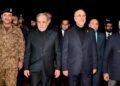
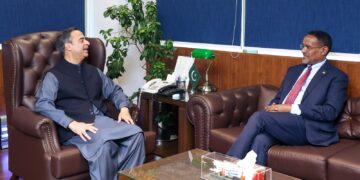
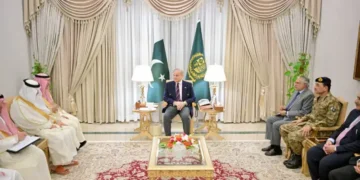
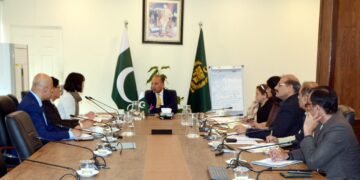
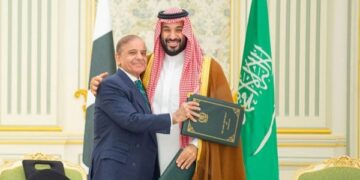
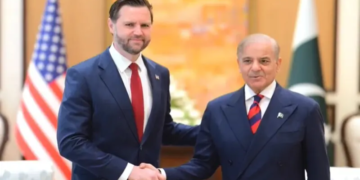
During his meeting with the Iranian delegation, the prime minister reaffirmed Pakistan’s commitment to facilitating dialogue and promoting regional stability. Senior Pakistani officials, including Ishaq Dar, Asim Munir, and Mohsin Raza Naqvi, were also in attendance. Later, in talks with Vice President JD Vance, PM Shehbaz expressed optimism that the negotiations could pave the way for long-term peace. He reiterated Pakistan’s readiness to continue playing a mediatory role between Washington and Tehran.
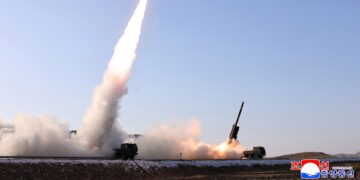
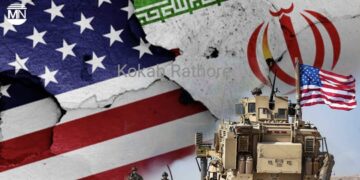
The diplomatic engagement comes amid a fragile two-week ceasefire in the broader Iran–Israel War, which began following US-Israeli strikes on February 28. Pakistan played a key role in brokering the temporary truce announced on April 8.
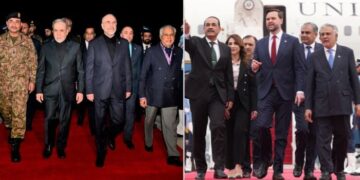
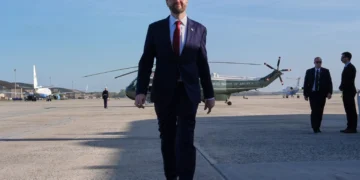
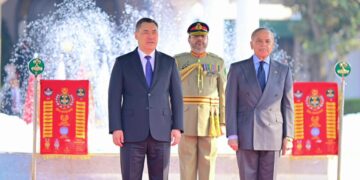
Vice President Vance arrived earlier in the day at Nur Khan Air Base, where he was received by senior Pakistani leadership. Meanwhile, the Iranian delegation reached Islamabad after resolving last-minute concerns over Israeli strikes in Lebanon, which Tehran had insisted must halt before negotiations could proceed.
Iran’s participation was conditional on two major demands: a ceasefire in Lebanon and the release of approximately $7 billion in frozen Iranian assets. Tehran has emphasized that any agreement must cover all regional fronts, including Hezbollah-linked tensions, while the US and Israel have treated Lebanon as a separate issue—highlighting a key divide in negotiations.
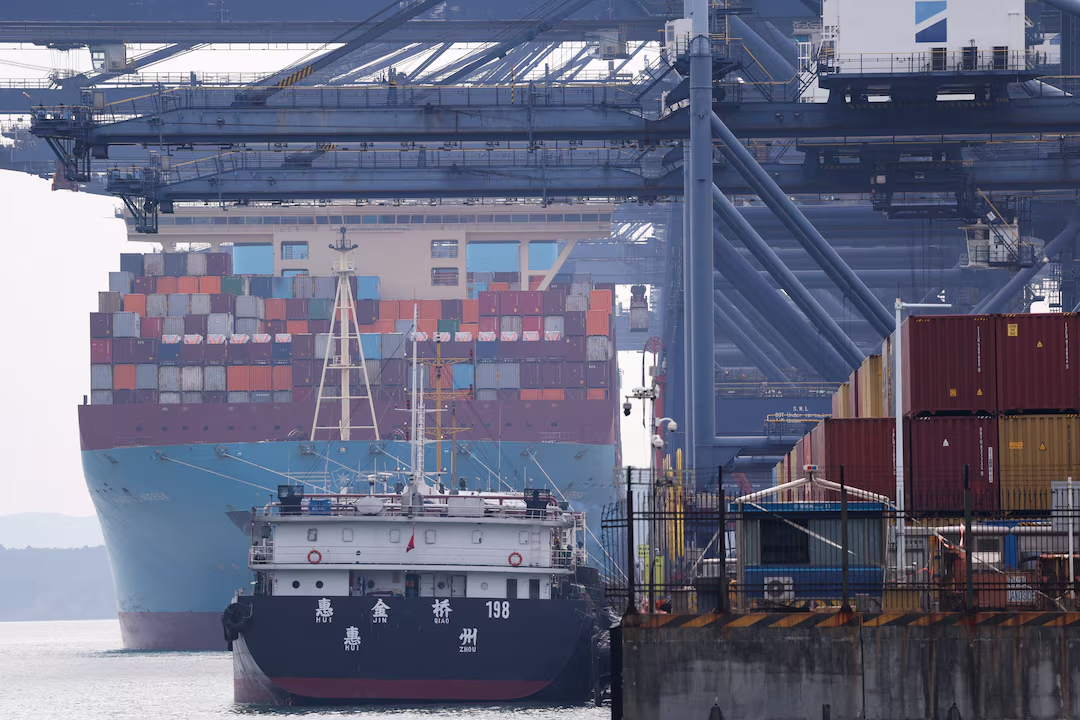
The agenda for the Islamabad Talks reflects deep-rooted disagreements. Washington is expected to push for strict limits on Iran’s nuclear programme, while Tehran is seeking full sanctions relief, recognition of its nuclear rights, and guarantees regarding navigation through the Strait of Hormuz.
Additional contentious issues include missile capabilities, regional proxy networks, and the sequencing of mutual concessions.
While expectations for immediate breakthroughs remain low, analysts view the talks as a rare and significant diplomatic opening. Even limited progress—such as confidence-building measures or agreement on continued dialogue—could mark an important step toward de-escalation in an increasingly volatile region.
Despite the challenges, Pakistan has positioned itself at the center of a critical geopolitical effort, with PM Shehbaz vowing to “try its level best” to ensure the success of the negotiations.