






























































Pakistan has condemned India’s recent unilateral suspension of the Indus Water Treaty (IWT), calling it a direct threat to the country’s food and economic security that could trigger a severe humanitarian crisis.

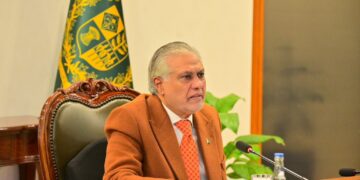
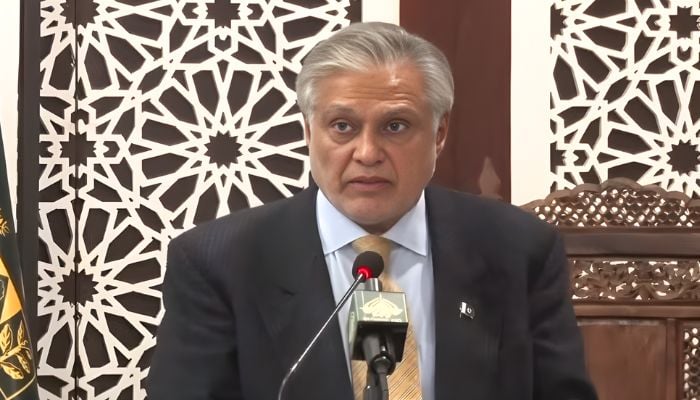
During a briefing to foreign diplomats, Deputy Prime Minister and Foreign Minister Ishaq Dar criticized India’s move following the April 2025 Pahalgam attack, describing it as a stark example of weaponizing water resources.“Indian manipulation of water at a critical time in our agricultural cycle directly threatens the lives and livelihoods of our citizens, as well as Pakistan’s food and economic security,” Dar said. He emphasized that the Indus Water Treaty, a cornerstone of peace and stability in South Asia, is being undermined by India’s suspension of the pact, its halt of hydrological data exchanges, and disruptions to the joint monitoring mechanisms agreed under the treaty—moves that have further escalated regional tensions.
The statement followed Pakistan’s recent demand for an explanation from India over abrupt variations in the flow of the River Chenab, urging the international community to take note of New Delhi’s ongoing disregard for the treaty. Spokesperson Tahir Andrabi noted that these fluctuations had been particularly noticeable since 7 December.
Dar highlighted that millions of Pakistanis relying on the river for agriculture, water, sanitation, and ecosystem health are facing adverse impacts, with their basic rights to work, livelihood, water, food, and an adequate standard of living being undermined. He also pointed to rulings by the Permanent Court of Arbitration in June and August 2025, which reaffirmed the continuing validity of the IWT and made clear that India cannot claim immunity from its provisions.
While reiterating Pakistan’s commitment to peaceful dispute resolution, Dar stressed that the country will not compromise on water rights essential for its citizens and urged the international community, particularly UN Security Council members, to take immediate action.
The IWT, signed in September 1960 and mediated by the World Bank, divides the Indus River system between the two nuclear-armed neighbours. India has rights over the eastern rivers — Sutlej, Beas, and Ravi — while Pakistan is allocated most of the western rivers — Indus, Jhelum, and Chenab. The treaty does not allow unilateral suspension or termination and includes a clear dispute resolution mechanism.
Following tensions after the killing of 26 people in Indian Illegally Occupied Jammu and Kashmir in April 2025, India held the IWT in abeyance, accusing Pakistan of orchestrating the attack, a claim Islamabad denies.