







































































India has once again triggered a “water war” by deliberately manipulating the flow of the Chenab River during the winter season, in clear violation of the Indus Waters Treaty (IWT), Pakistan said on Thursday.

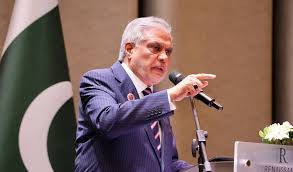
Speaking at a weekly press briefing, Foreign Office spokesperson Tahir Hussain Andrabi said Pakistan has recorded abrupt and abnormal changes in the Chenab’s water flow at Head Marala since December 7.
“Pakistan views these developments with grave concern. The sudden variations indicate unilateral releases of water into the Chenab River by India without prior notification or the mandatory sharing of data,” he said.
He added that Pakistan has formally engaged India through the Indus Water Commissioner, seeking full details and clarification strictly in accordance with the mechanisms provided under the Indus Waters Treaty.
Highlighting the serious implications of such actions, Andrabi said any manipulation of river flows—especially during a critical agricultural period—poses a direct threat to lives, livelihoods, food security and the overall economic stability of Pakistan.
According to official data, India released around 58,000 cusecs of water into the Chenab during the night of December 7 and 8, 2025. This was followed by a drastic reduction in releases to just 870 cusecs on December 13, with flows remaining between 870 and 1,000 cusecs until December 17.
Historical records show that average Chenab River flows during this period over the past decade have typically ranged between 4,000 and 10,000 cusecs, underscoring the abnormal nature of the recent reductions.
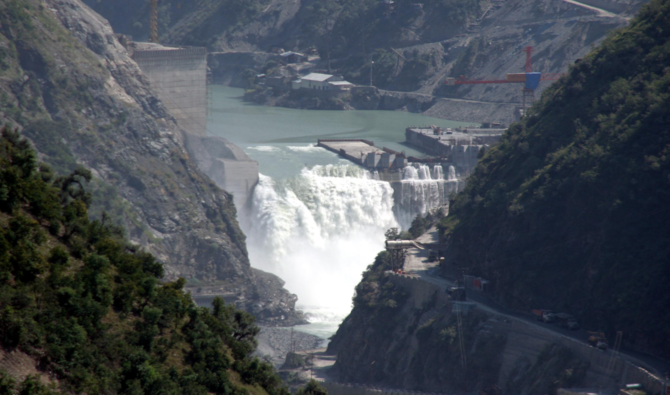
Pakistani authorities said the move constitutes a clear breach of the 1960 Indus Waters Treaty, as India emptied and then refilled the reservoir of the Baglihar Hydropower Project. Under the treaty, run-of-the-river projects on rivers allocated to Pakistan cannot be emptied or refilled arbitrarily.
The Court of Arbitration, in its decision dated August 8, 2025, had already ruled that such manipulation of water releases—through the emptying and filling of dams on rivers allocated to Pakistan—amounts to water weaponisation.
Pakistan’s Commissioner for Indus Waters, Syed Mehr Ali Shah, confirmed that he has written a formal letter to his Indian counterpart, reiterating that the Indus Waters Treaty remains fully operational and legally binding, as reaffirmed by the Court of Arbitration.
He said the communication included scientific and technical evidence demonstrating that the emptying and refilling of the Baglihar Dam was not caused by natural hydrometeorological factors, but by deliberate intervention.
The letter was issued under Article VI(1)(a) and (b) of the IWT, requesting a detailed exchange of water-release data. Additionally, Pakistan invoked Article VIII(1)(a) and (4)(b) to seek immediate consultations so that the consequences of sudden and destabilising variations in water flows could be addressed without delay.
It is worth noting that India had unilaterally announced the suspension of the Indus Waters Treaty on April 23, 2024. However, the Court of Arbitration later clarified that the treaty cannot be suspended unilaterally and remains fully enforceable.
Pakistan’s National Security Committee, which met on April 24, 2024, under the chairmanship of Prime Minister Shehbaz Sharif, firmly rejected India’s announcement and declared that any attempt to disrupt Pakistan’s water rights would be viewed as an act of war.