












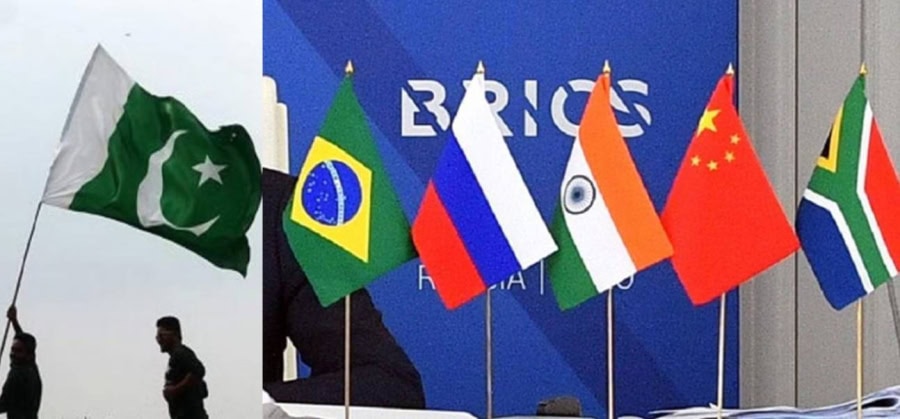
In the early 2000, when the major economies grasping the world, a quiet idea was being introduced. In 2001, economist Jim O’Neill of Goldman Sachs coined the term “BRIC” to describe the fastest growing economies of the world Brazil, Russia, India and China to which he thought would be the biggest economies of the world.

At the time, it was only a financial concept; few imagined it would evolve into one of the most influential political and economic groupings in the world. That idea became reality in 2009, when the leaders of Brazil, Russia, India, and China met for the first BRIC summit amid a global financial crisis that exposed the weaknesses of Western-led institutions like the IMF and World Bank. Their message was simple but powerful: the global system no longer reflected the realities of a changing world. In 2010, South Africa joined, transforming BRIC into BRICS and giving the bloc a stronger voice from the African continent.
Over the years, BRICS evolved from annual meetings into a structured platform with real institutions. In 2014, the bloc launched the New Development Bank (NDB) to finance infrastructure and sustainable development projects, offering an alternative to Western-dominated lenders. Since then, BRICS has steadily vast its cooperation in trade, energy, technology, education, and security. With the 2023 expansion, new members such as Iran, UAE, Egypt and Ethiopia formally joined the BRICS on January 1, 2024, transforming it into a broader coalition of emerging and developing economies.
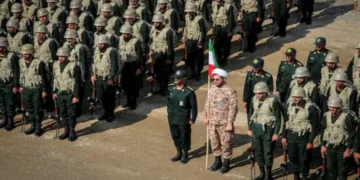
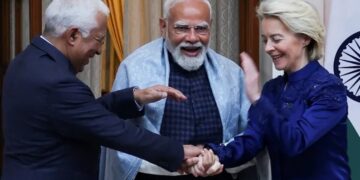
BRICS’ significance extends beyond economics. The bloc positions itself as the voice of the Global South, advocating for a multipolar world order where power is not concentrated in Western capitals. Leaders call for reforms in global institutions, greater use of local currencies in trade, and reduced reliance on the US dollar. As Russian President Vladimir Putin once said, BRICS reflects “the objective process of forming a multipolar world.” In recent years, coordinated diplomatic positions, votes in international forums, and even BRICS-Plus military exercises signal a bloc increasingly confident on the global stage. It is within this evolving landscape — where power is shifting, alliances are being redefined, and new platforms challenge old systems — that Pakistan’s interest in BRICS must be understood.
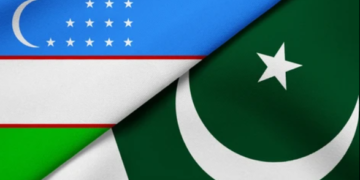
Pakistan formally submitted its application to join BRICS in 2023, following the block decision of expansion. Islamabad viewed this opportunity as a potential to strengthen South-South cooperation, diversify trade and investment and reduce dependence on Western bloc. The economic motivation is evident. A ‘’Business Recorder’’ analysis notes that over 80 % of Pakistan’s textile exports are destined for just three markets — the EU, UK, and the US. By contrast, BRICS offers access to fast-growing emerging markets and alternative trade corridors linking Asia, the Middle East, and beyond.
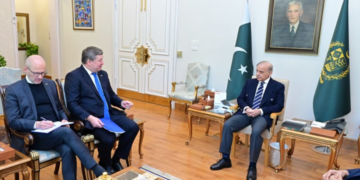
China has openly backed Pakistan’s bid. In June 2025, Hu Zhaoming, Director-General of the International Department of the Communist Party of China, said Beijing “fully supports Pakistan’s bid for BRICS membership,” reflecting the depth of the China-Pakistan strategic partnership and Beijing’s interest in stronger regional connectivity through initiatives such as CPEC.
Yet Pakistan was not included in the BRICS expansion, largely due to the bloc’s consensus-based decision-making process. It is widely assumed that India’s opposition is a key factor, underscoring how bilateral rivalries influence multilateral forums. Beyond geopolitics, Pakistan faces structural constraints that complicate its bid, including macroeconomic instability, high external debt, repeated IMF programme, and limited export diversification. Some BRICS members remain cautious about rapid expansion, debating whether new entrants can contribute meaningfully to the bloc’s economic and institutional agenda. Pakistan’s pursuit of BRICS membership reflects a broader strategy of its foreign policy in a world moving toward multipolarity.
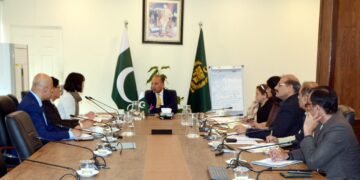
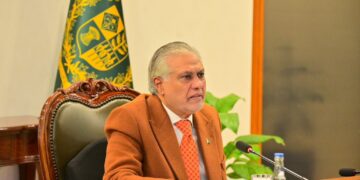
While the door to BRICS is not yet open, Islamabad’s bid highlights its intention to place itself with emerging economies. As Finance Minister Muhammad Aurangzeb said in late 2025, Pakistan is prepared to “play a constructive role” within the BRICS framework if admitted — reflecting Islamabad’s aspiration to contribute positively to the bloc’s objectives even as it navigates a complex landscape of economics, geopolitics, and power politics.
The author is a multimedia journalist and digital strategist associated with Diplomatic Affairs, covering geopolitics, conflict, and human rights. Her work blends investigative reporting with data-driven storytelling, uncovering voices from regions often ignored by mainstream media. She can be reached at aleezashaikh92@gmail.com