






































































Reuters: Even as the United States and Iran move toward a ceasefire, Israel is expanding its military posture across the region, preparing for what officials describe as a prolonged conflict.

Israeli forces are establishing “buffer zones” in Gaza Strip, southern Lebanon, and parts of Syria. According to Israeli military and defence officials, the strategy reflects a shift following the October 7, 2023 attacks, acknowledging that groups like Hezbollah and Hamas cannot be completely eliminated.“This is a long-term conflict where threats must be contained and deterred,” analysts say. Israel has agreed to pause direct attacks on Iran as part of ongoing negotiations but continues operations against Hezbollah. After Hezbollah launched rockets into Israel in March, Israeli forces advanced into southern Lebanon, aiming to create a buffer zone extending several kilometers from the border.
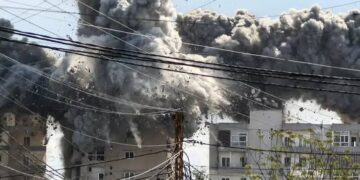
Residents in affected areas have been ordered to evacuate, and military officials say operations are targeting locations believed to be used for storing weapons or launching attacks. The objective is to push threats farther from Israeli border communities.
Prime Minister Benjamin Netanyahu has stated that Israel has established “security belts” beyond its borders, including in Gaza and along parts of Syria and Lebanon.
The approach builds on longstanding territorial control, including the West Bank and the Golan Heights, captured during the Six-Day War. Some members of Israel’s government have advocated for expanding control further. However, officials indicate that buffer zones are intended primarily as security measures rather than permanent borders, with forces maintaining flexibility through patrols and targeted operations.
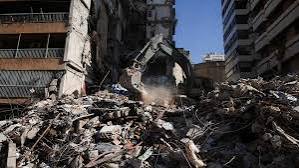
Israeli Defence Minister Israel Katz has said that infrastructure near the border used by militant groups would be destroyed to remove threats.
Legal experts caution that widespread destruction of civilian property could violate international law unless clearly justified by military necessity.
Public opinion in Israel remains sceptical about long-term peace agreements. Surveys in recent years show limited confidence in lasting coexistence with a future Palestinian state, contributing to support for security-focused strategies.
Analysts warn that maintaining multiple active fronts across Lebanon, Gaza, Syria, and the West Bank could strain Israel’s military over time, raising questions about the sustainability of a “forever war” approach.