


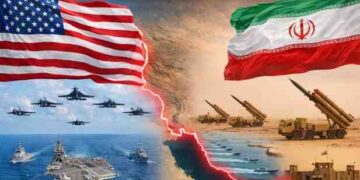



































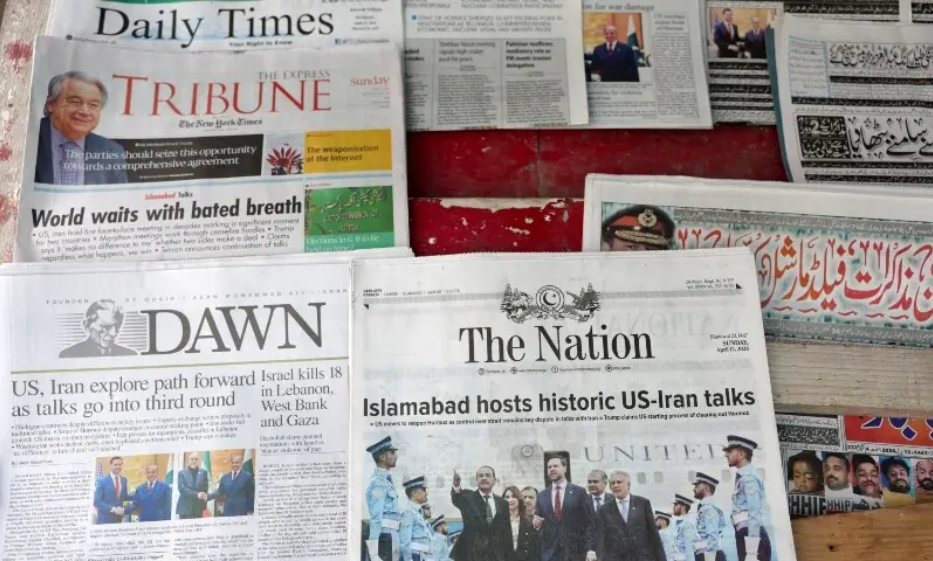
WASHINGTON: American scholars are increasingly pointing to Pakistan’s growing diplomatic influence as talks between the United States and Iran in Islamabad extended into lengthy and intensive negotiations.

Following 21 hours of continuous discussions, US Vice President JD Vance departed Islamabad, confirming that the talks did not result in an agreement. However, he acknowledged Pakistan’s efforts in facilitating the dialogue, stating: “Whatever shortcomings in the negotiations were not because of the Pakistanis, who did an amazing job and really tried to help us and the Iranians bridge the gap and get to a deal.”
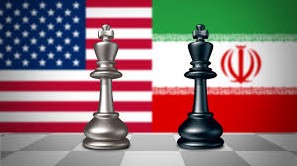
The negotiations addressed a wide range of issues, including Iran’s nuclear programme, sanctions relief, frozen assets, economic arrangements, and regional security. The process also included expert-level discussions and formal written proposals, indicating a more structured and serious diplomatic engagement.
BBC’s Washington correspondent Ione Wells highlighted Pakistan’s role, noting that at a time when fears of a broader global conflict were rising, the country helped shift the situation toward dialogue. “We must say Pakistan did it,” she remarked outside the White House. Referring to earlier skepticism, she added: “Bringing Iran and the US to talks was once called impossible. Propaganda said delegations would never reach Pakistan. Saboteurs tried to spread doubt, but Pakistan delivered.”
She further emphasized: “At a time when the world feared a wider war, Pakistan opened the door for dialogue. No matter what the final result is, this is already a huge win for Pakistan.”
US-based analysts are now closely evaluating Pakistan’s evolving role in these developments. Michael Kugelman, Senior Fellow for South Asia at the Atlantic Council, described a significant shift in Pakistan’s position. “Pakistan’s role has shifted from facilitator and go-between to direct mediator and peace negotiator. For now, at least, Pakistan’s in the driver’s seat in the difficult & delicate effort to guide the US & Iran to an off ramp,” he said.
He also underscored the complexity of the current situation, noting: “Some have cited precedents for Pakistani mediation, e.g., facilitating US-China normalisation, helping w/US-Taliban talks. Let’s be clear: What it’s doing now—trying to end conflict [between] two deeply hostile states who see eye to eye on [very] little—is much more ambitious. A massive lift.”
Elizabeth Threlkeld, Director of the South Asia Program at the Stimson Centre, highlighted Pakistan’s strategic positioning and its ability to maintain relationships across rival powers. “Pakistan borders Iran … it also has strong ties with Saudi Arabia. Pakistan has rebooted its relationship with Washington over the course of the last year with the second Trump administration.”
She added: “And it also has a strong relationship with China. And so over the course of the conflict and, indeed, even before this conflict began, Pakistan had played a quiet and helpful role in trying to pass messages among all of those sides and particularly the US and Iran.”
Commenting on the complexity of Pakistan’s role, she said: “And in this case, it really has managed to walk a very difficult tightrope in bringing these talks together, at a moment when it had a lot on the line in terms of its own liabilities in this conflict, given its exposure.”
Threlkeld also pointed out the diplomatic gains for Islamabad, stating: “Pakistan has very deftly managed to rebuild its relations with President Trump in his second term. And in some ways, that’s already a victory for Pakistan because it succeeded in playing this role.”
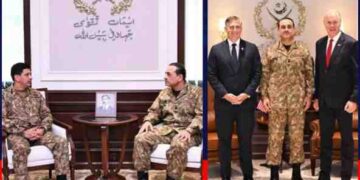
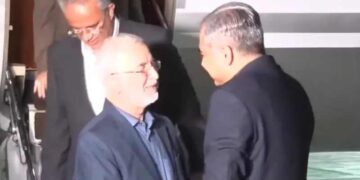
Meanwhile, Daniel Markey, another Senior Fellow at the Stimson Centre, drew attention to broader changes in US engagement in South Asia. Referring to recent diplomatic visuals, he noted: “These photos being almost exactly 1 year apart really do show the rapid upheaval in US South Asia policy.“
Overall, the perspectives of American analysts suggest a significant shift in how Pakistan’s diplomatic role is being perceived. While Kugelman highlights its leadership in the process, Threlkeld focuses on its balancing strategy among global and regional powers, and Markey places these developments within a wider transformation of US policy in South Asia.
Although the talks did not result in a formal agreement, there is a growing consensus among US observers that Pakistan is no longer just facilitating dialogue but is actively influencing and shaping one of the most sensitive diplomatic efforts underway.