















































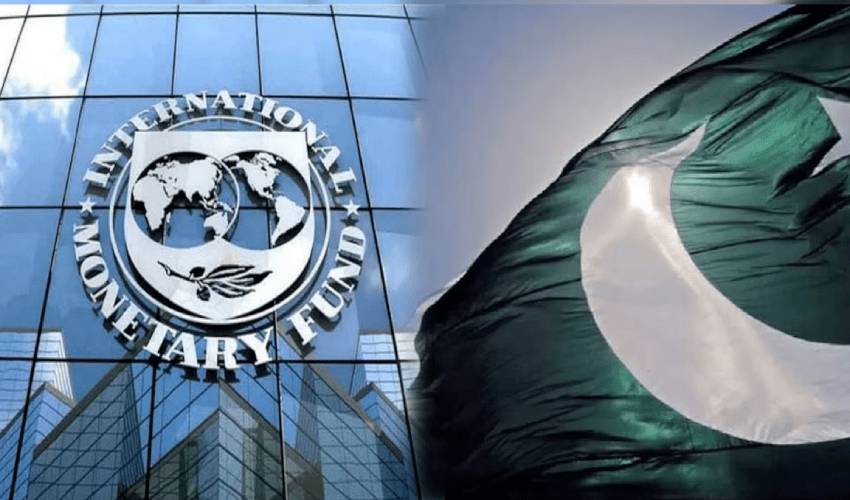
ISLAMABAD: Pakistan has assured the International Monetary Fund (IMF) it will pass on oil price increases to consumers while developing targeted subsidy mechanisms to shield vulnerable segments amid rising global volatility, The News reported.

In order to mitigate the negative impacts of higher fuel and food prices in the aftermath of geopolitical conflict in the Gulf region, the monthly stipend under the BISP programme will be increased from Rs14,500 to Rs19,500 under the new structural benchmark, with effect from January 2027.
Pakistani authorities have conceded to the IMF that the government established the Prime Minister’s Austerity Fund, slashed the PSDP by Rs100 billion, and saved Rs27 billion through a reduction of fuel allowances and a 20% cut in non-salary expenditures. Such support measures could only be temporary, and regular adjustment in fuel prices plays a crucial role in helping to curtail the demand for fuel. The government will implement a targeted subsidy in order to protect the vulnerable from high fuel prices.
“Keeping in view the high volatility of oil and fertiliser prices and the general macroeconomic uncertainty, Pakistan will postpone the increase in FED on fertilisers and pesticides. We are mindful of the strategic nature of fertilisers and the many uncertainties faced by the agricultural sector,” said official sources.
“To this end, and to protect the most vulnerable from the recent volatility in food and fuel prices, we commit to significantly improving the generosity, coverage, and capacity of Benazir Income Support Program (BISP) initiatives and provincial and federal health and education expenditure amid necessary fiscal consolidation,” the sources said.
The sources added: “Under unconditional cash transfers, the government will add 200,000 households to the program by the end of FY26, bringing total enrollment to 10.2 million households. The government will incorporate the findings of recently updated Household Integrated Economic Survey (HIES), so the FY27 budget will allow space for an increase in the Kafaalat benefit from Rs14,500 to Rs19,500 from January 2027.
“This additional amount is meant to absorb the inflationary pressure in the aftermath of geopolitical tension in the region, bringing quarterly benefits significantly closer to the goal of 15 percent of the lowest family income quintile’s consumption basket. The government is committed to continued inflation adjustment of the Kafaalat benefit beyond FY27 to maintain at a minimum its value in real terms for recipient households.
“Under conditional cash transfers, the government will increase enrollment in two main CCT programs over FY26, by 700,000 to 11.4 million for the Taleemi health and education program and by 200,000 to 2.2 million for the Nashonama nutrition program.
“The FY27 budget will allow space to maintain spending as a share of GDP and enrollment for these two programs, and for the addition of a new CCT program targeting skills development. We will continue working closely with the World Bank and provinces to avoid overlap between BISP and provincial CCT programs at the district level.”
The government has made further progress in improving the payments mechanism under BISP. It has created e-wallets for 7 million Kafaalat beneficiary families and distributed SIM cards to those beneficiaries with mobile phones and will secure wallets for all remaining families by end-FY26.
This will allow for the disbursement of benefits through digital accounts starting in Q4 FY26. The government is also working with the SBP to implement interoperability among banks used by beneficiaries. These measures will improve the transparency, disbursement efficiency and convenience of benefits.
Meanwhile, according to the Pakistan Bureau of Statistics, Pakistan’s inflation surged to its highest level in a year and a half in March, breaching the central bank’s target ceiling as Strait of Hormuz supply disruptions drove up fuel and energy prices, with analysts warning the worst was yet to come.
The consumer price index rose 7.3% year-on-year in March 2026, up from 6.98% in February and a mere 0.7% a year earlier, the steepest reading since August 2024 and the first breach of State Bank of Pakistan’s 5-7pc target band in months.
Transport costs led the surge, skyrocketing to 12.5% year-on-year from just 0.4% the previous month, while housing and utilities climbed to 11.5% from 9.7%, driven by double-digit fuel price increases, scrapped electricity cross-subsidies and newly imposed fixed charges. Monthly CPI jumped 1.2% , quadruple the 0.3% rise recorded in February.
The Wholesale Price Index leapt to 6.7% from just 1.0% the prior month, signaling that producers’ cost pressures have yet to fully hit consumers as WPI typically feed into retail inflation (CPI) with a lag.
“The March spike highlights lingering risks from domestic energy costs, now amplified by Middle East tensions,” analysts said, warning that a rising oil import bill could weaken the rupee and push inflation higher in coming months.
The State Bank held its benchmark policy rate unchanged at 10.5% during January-end during its Monetary Policy Committee (MPC) meeting.
The nine-month average inflation for the current fiscal year stands at 5.67%, against 5.25% for the same period a year earlier. Core inflation, which strips out volatile food and energy prices, offered little relief. Urban core edged up to 7.4% from 7.1%, while rural core ticked higher to 8.4% from 8.3%.
Among food staples, wheat prices surged 34.2% year-on-year, wheat flour 23.6%, and meat 11.2%, though declines in potatoes, eggs and chicken helped temper the overall food index, which slowed to 3.6% from 5.8%.
In the non-food segment, personal effects charges jumped 56.5%, liquefied hydrocarbons 23.5%, gas charges 22.9%, motor fuel 18.2% and electricity 14.2%.
Analysts cautioned that the threat extends beyond prices. With millions of Pakistanis employed in Gulf states, any escalation in regional hostilities risks disrupting remittances, a critical economic lifeline, at a moment when households are already squeezed by soaring utility bills and stagnant wages.
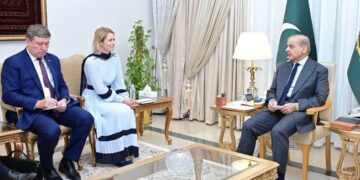
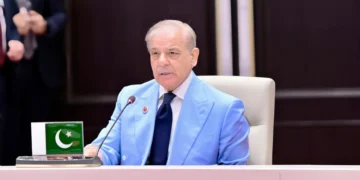
Meanwhile, chairing a review meeting to formulate a strategy aimed at safeguarding the country from financial and economic impacts arising from the tense regional situation, Prime Minister Shehbaz Sharif directed the relevant authorities to formulate a comprehensive strategy to curtail economic effects on public in the wake of current regional situation. He stressed that the strategy should not disrupt production or the balance of supply and demand across economic sectors.
He further directed that both external and internal macroeconomic factors be carefully evaluated while formulating the strategy. The prime minister said that many countries around the world were facing difficulties in maintaining the balance of supply and demand for essential commodities due to the current situation. However, he noted with satisfaction that Pakistan was effectively and successfully managing this challenge. He appreciated that all relevant institutions had taken timely and effective measures to prevent an emergency situation in the supply and demand of essential goods. He further highlighted that after meeting domestic requirements for food and essential commodities, progress was being made successfully on a comprehensive strategy to export surplus production.
In view of rising trends in global market prices, the prime minister directed that a medium- and long-term comprehensive strategy be developed to tackle financial and economic impacts on the country. He also directed that effective measures be proposed to minimise the impact of rising production costs on exports and overall economic output due to the global situation.
Meanwhile, speaking to VEON Group CEO Kaan Terzioglu, who along with a delegation called on him at the PM House, the prime minister said the government was providing all possible facilities to investors in digital and telecom sectors to promote the country’s digital economy. “The recent successful auction of 5G spectrum in Pakistan reflects that the government is moving in the right direction,” he added. He stated that Pakistan was pursuing a comprehensive and effective strategy to increase foreign investment and promote innovation in the information technology sector.
On the occasion, Kaan Terzioglu particularly appreciated the government’s initiatives under the prime minister’s leadership to promote a cashless economy and complete digitalisation of the economy. He also expressed his company’s intention to further increase investment in Pakistan.
Also on Wednesday, chairing a separate meeting on enhancing employment opportunities for the country’s youth, PM Shehbaz said the government was prioritising technical and vocational training to youth with international certifications in skills with high global demand. He said positive results had started emerging from the comprehensive training programmes launched through the National Vocational and Technical Training Commission (NAVTTC) to harness the youth’s potential.
Expressing satisfaction over the performance of Prime Minister’s Youth Programme under the leadership of Rana Mashhood Ahmed Khan, the prime minister called the youth “future of our nation” and highlighted the government’s initiatives to provide them with professional skills to integrate them into the workforce. He instructed to accelerate the work on the initiatives aimed at technical and vocational training of youth in line with contemporary requirements.
Meanwhile, Dr Khaqan Najeeb, former adviser to the Ministry of Finance, said Pakistan must respond to the Middle East crisis with clarity and discipline: ensure timely pass-through of global fuel prices to preserve signals and contain imbalances, while replacing blanket subsidies with targeted support for vulnerable users, including around 3 million motorbike owners, farmers using tractors, rickshaws and public transport, jointly financed by federal and provincial governments through curtailment of non-essential current expenditures.
Dr Khaqan stressed the need for a demand conservation strategy, including mobility management, work-from-home where feasible, and calibrated commercial closures. Crucially, government communication must frame this as one of the largest energy shocks in recent history, impacting the balance of payments, fiscal stability and growth prospects, while building public buy-in for necessary adjustments and behavioural change.
Dr Khaqan emphasised this moment should also drive longer-term reforms, accelerating energy indigenisation, strengthening rail-based freight and developing oil pipeline infrastructure to enhance efficiency, reduce costs and improve energy security.