















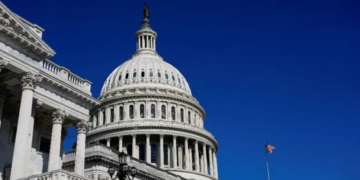























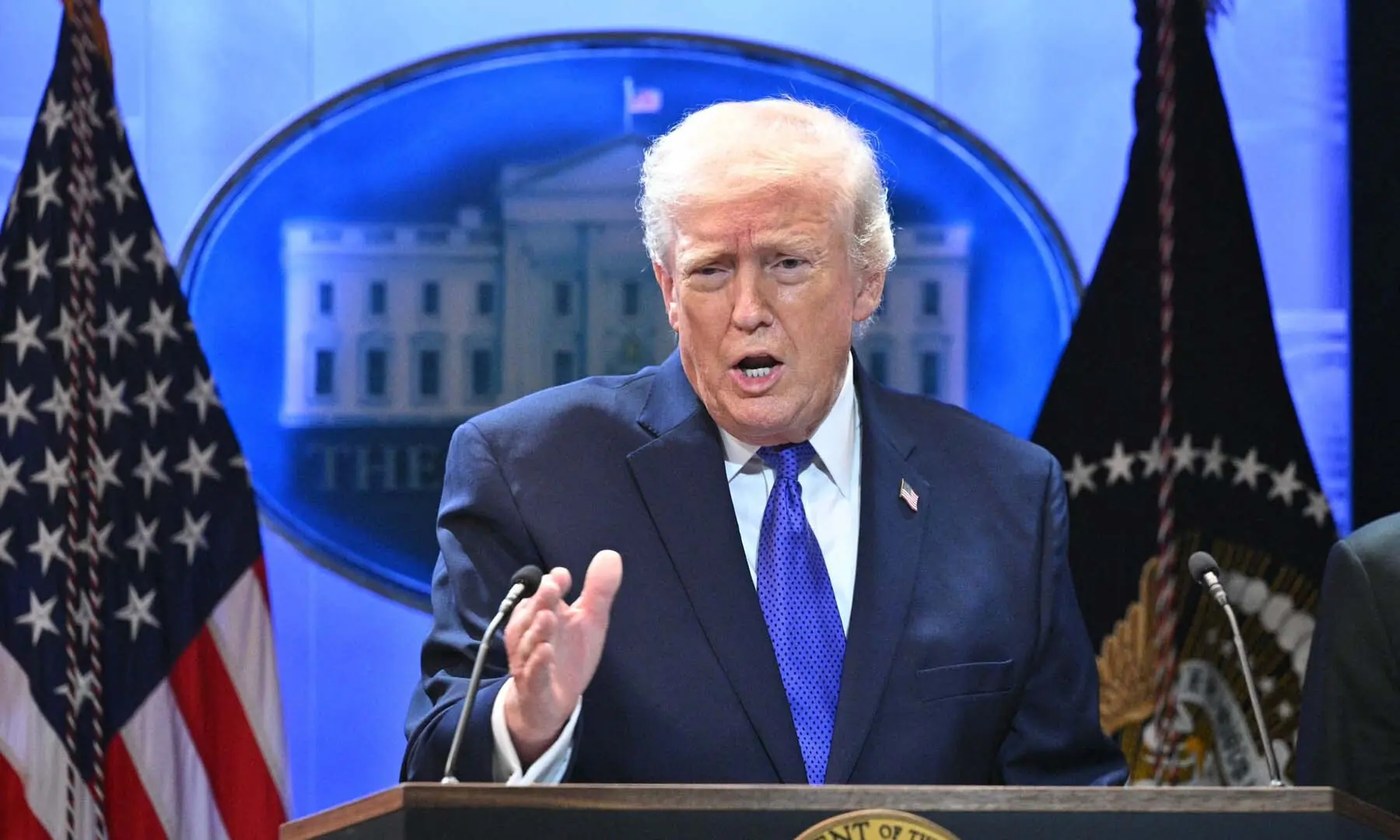
WASHINGTON, (Reuters): U.S. President Donald Trump reacted angrily on Friday after the Supreme Court of the United States ruled 6–3 that he lacked the authority to unilaterally impose sweeping global tariffs, declaring himself “ashamed” of certain justices while vowing to press ahead with his trade agenda.

Despite criticizing the decision as “ridiculous,” Trump complied with the ruling by signing an executive order repealing the tariffs struck down by the court. Within hours, however, he issued a new proclamation introducing a 10% tariff on most imports from all countries for 150 days, citing authority under Section 122 of the Trade Act of 1974.
The law permits temporary tariffs of up to 15% to address balance-of-payments concerns, though the move may face further legal challenges. The court’s opinion, authored by Chief Justice John Roberts, stated that the Constitution grants Congress — not the president — the power to impose taxes and duties.
The justices rejected the administration’s argument that the International Emergency Economic Powers Act (IEEPA) allowed Trump to levy tariffs of unlimited scope during peacetime.“The Government thus concedes, as it must, that the President enjoys no inherent authority to impose tariffs during peacetime,” Roberts wrote, adding that the United States “is not at war with every nation in the world.”
The ruling dismantled a key element of Trump’s trade strategy, which relied on the threat of steep tariffs to secure concessions from foreign governments. It also cast uncertainty over approximately $175 billion in tariff revenues collected from U.S. importers under the now-invalidated measures.
At the White House, Trump accused the court majority of lacking “the courage to do what’s right,” suggesting without evidence that foreign interests had influenced the decision. “It’s ridiculous, but it’s OK, because we have other ways, numerous other ways,” he said.
Markets initially surged on news of the ruling but later pared gains as investors digested the implications of the president’s swift countermeasure. Analysts warned that renewed uncertainty over U.S. trade policy could weigh on global markets and complicate ongoing trade negotiations.
Treasury Secretary Scott Bessent said the decision may alter but not end the administration’s leverage. “We will get back to the same tariff level for the countries,” he said in a television interview, adding that it may be achieved in “a less direct and slightly more convoluted manner.”
Under Section 122, any extension of the temporary tariffs beyond 150 days would require congressional approval, setting the stage for potential political and legal battles in the months ahead.