
























































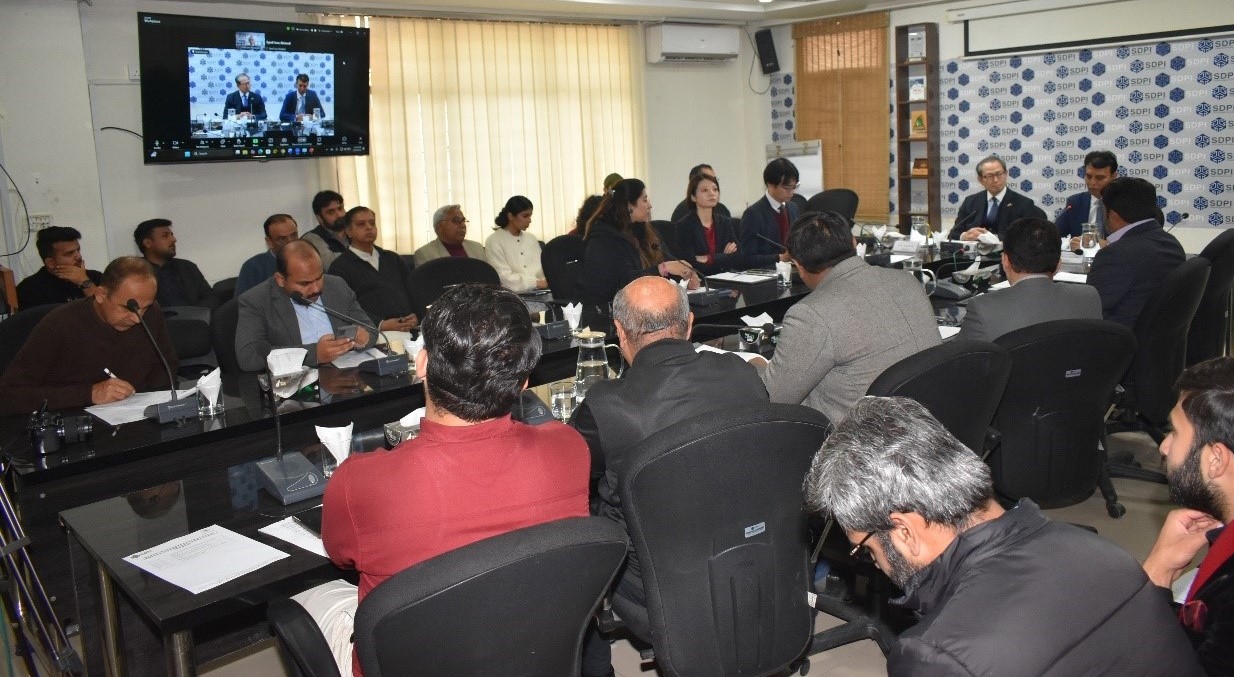
Islamabad: Renowned Japanese development economist Prof. Yamagata Tatsufumi highlighted Bangladesh’s remarkable economic transformation during a special guest lecture co-hosted by the Sustainable Development Policy Institute (SDPI) and the Embassy of Japan. The lecture, titled “Bangladesh as an East Asian Country: Its Pattern of Industrial Development”, examined how Bangladesh transitioned from a typical South Asian economy to an East Asian-style industrial powerhouse.

Prof. Yamagata, a former visiting fellow at the Bangladesh Institute of Development Studies and a professor at Ritsumeikan Asia Pacific University, noted that Bangladesh’s high-intensity industrial development model provides important lessons for Pakistan and other South Asian nations. He emphasized that Bangladesh’s labor-abundant, land-scarce economy has enabled it to excel in labor-intensive industries and gradually diversify into sectors such as electronics, transport equipment, and pharmaceuticals.
Opening the session, Dr. Abid Qaiyum Suleri, Executive Director of SDPI, said Bangladesh’s experience is particularly relevant for Pakistan due to similarities in economic structure and natural resources. He highlighted Bangladesh’s success in expanding exports, boosting women’s workforce participation, and capturing significant market share in sectors once dominated by Pakistan, such as bicycles.
Prof. Yamagata challenged the notion that Bangladesh’s export success is solely due to low wages, pointing instead to strategic industrial development and diversification. He noted that garments, while still accounting for nearly 80 percent of total exports, serve as a foundation for broader industrial growth, including assembly of electrical appliances, shipbuilding, and drone manufacturing.
The Japanese expert also discussed the implications of Bangladesh’s upcoming graduation from Least Developed Country status, noting challenges for the pharmaceutical sector and changes in trade regulations, while acknowledging growing foreign investment interest, particularly from China and Japan.
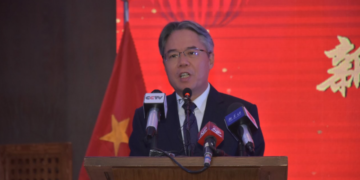
Ambassador of Japan to Pakistan, Akamatsu Shuichi, highlighted that Bangladesh’s industrial development offers valuable insights for Pakistan, especially in addressing labor abundance and economic diversification, urging South Asian countries to translate demographic trends into sustained economic growth.
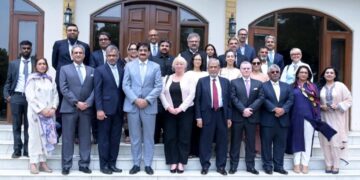
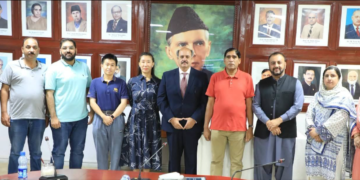
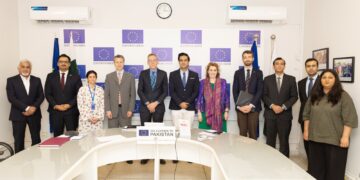
The lecture brought together policymakers, researchers, and development practitioners both in-person and online, fostering dialogue on regional industrialization, export competitiveness, and labor-intensive growth.