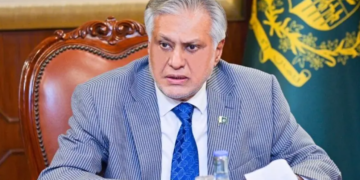













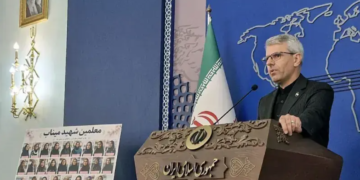


























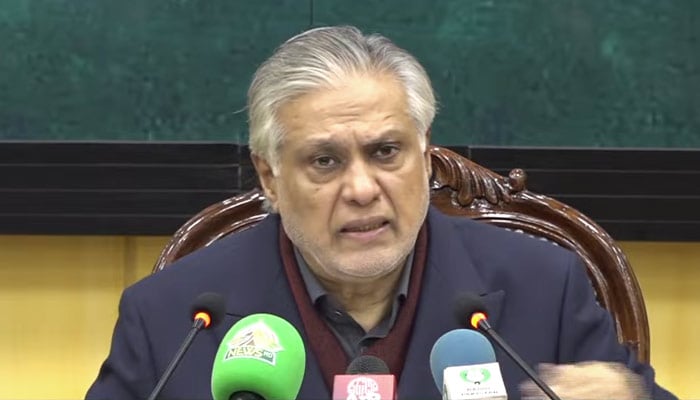
Islamabad, December 27, 2025 — Recalling Pakistan’s military success against India in May, Deputy Prime Minister and Foreign Minister Ishaq Dar on Saturday emphasized the need to transform Pakistan into an economic powerhouse, stating that the government is pursuing a coordinated strategy to ensure stability and growth.

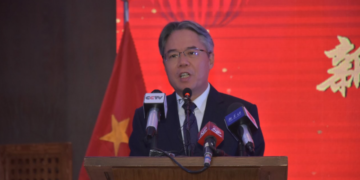
“We now have to make Pakistan an economic power,” DPM Dar said while addressing his annual news conference in Islamabad. He added that Pakistan’s foreign policy stature has improved globally, with the country’s positions increasingly heard and acknowledged at international forums.
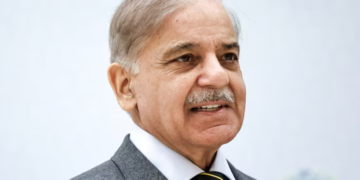
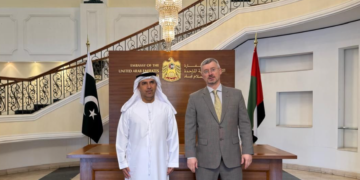
Dar credited Prime Minister Shehbaz Sharif for efforts to strengthen the economy, noting that the government is working toward long-term financial stability.Dar welcomed the recent visit of the UAE president to Pakistan, describing it as a “positive development” and highlighting discussions on bilateral trade, investment, and the energy sector.
He also noted Saudi Arabia’s support for Pakistan in securing the International Monetary Fund programme and highlighted financial support from China ($4 billion) and the UAE ($3 billion).
Military Success and Regional Security
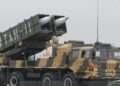
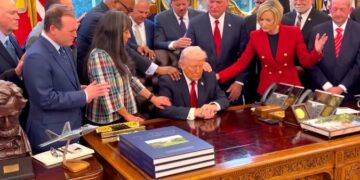
Referring to tensions with India, Dar stated that Pakistan had shot down seven Indian aircraft during recent hostilities and did not request a ceasefire. He detailed that India had sent 80 drones over 36 hours, of which Pakistan intercepted 79, with one drone striking a military installation and injuring one person. He also revealed that the United States Secretary of State had directly contacted him following Pakistan’s military response, and highlighted that trade with the US has reached $13.28 billion, currently in surplus. Dar also mentioned enhanced counterterrorism cooperation, with the US designating the BLA and Majid Brigade as global terrorist organizations this year.
Expanding Diplomatic Outreach
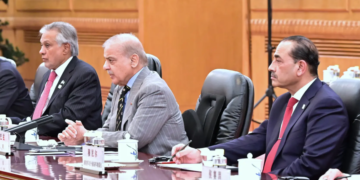
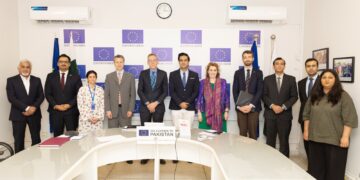
Dar said lasting peace in South Asia requires resolution of the Jammu and Kashmir dispute and condemned India’s demographic changes in Indian Illegally Occupied Jammu and Kashmir (IIOJK). He announced upcoming talks with Bangladesh after its general elections in February next year.He highlighted Pakistan’s renewed engagement with the European Union through a strategic dialogue in Brussels after four years, strong coordination with China, and described ties with Beijing as “ideal.”
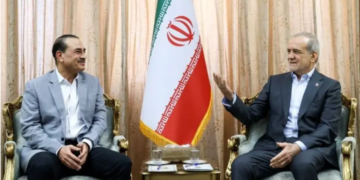
Dar also recalled Chinese Foreign Minister Wang Yi’s visit to Pakistan in August and mentioned continued interest from former President Asif Ali Zardari in visiting China.In the Middle East, Dar underlined the strategic mutual defence agreement with Saudi Arabia, covering defence, energy, technology, and mining, while noting strong relations with Turkey, Iran, Gulf states, and Central Asia. Pakistan condemned the attack on Iran on June 13 and maintains close ties with Bahrain, Iraq, Kuwait, and Qatar, reflecting what Dar called a broad-based and balanced foreign policy approach.
No Plan to Disarm Hamas
Addressing rising tensions over Palestine, Dar clarified that Pakistan has no plans to send troops to Gaza for disarming Hamas. He stressed that both civil and military leadership are aligned on this stance.
Dar condemned Israel’s continued violations of the peace deal, resulting in the deaths of hundreds of Palestinians, including women and children. He also pointed out that eight Muslim countries, including five Arab states, are coordinating with the US for peace in Palestine, noting uniform statements issued by all eight foreign ministers on the matter.