











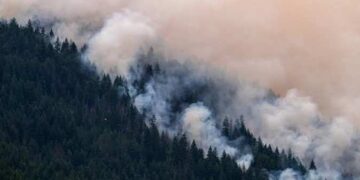
















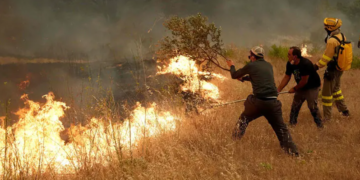




































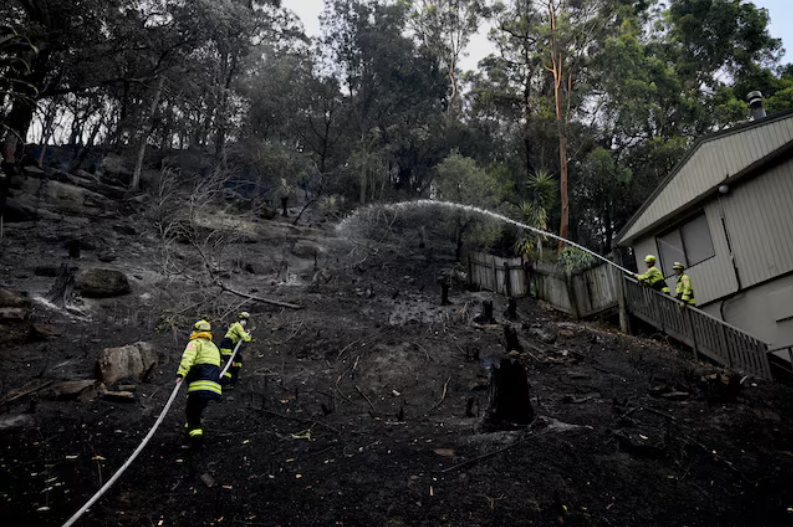
SYDNEY/WELLINGTON: An Australian firefighter died overnight after being hit by a falling tree while battling a bushfire that had already destroyed homes and scorched extensive areas of bushland north of Sydney, authorities said on Monday.
Emergency crews were dispatched to bushland near the rural town of Bulahdelah, about 200 km (124 miles) north of Sydney, following reports that a man had been struck by a tree. The 59-year-old went into cardiac arrest and was pronounced dead at the scene, officials said.

Prime Minister Anthony Albanese said the “terrible news is a sombre reminder” of the risks emergency workers confront while defending communities.
“We honour that bravery, every day,” Albanese said in a statement.
A rapidly spreading blaze over the weekend destroyed 16 homes in the Central Coast region of New South Wales, an area of roughly 350,000 residents and a major commuter belt just north of Sydney.
Resident Rouchelle Doust, from the heavily impacted town of Koolewong, said she and her husband attempted to protect their home as the fire approached.
“He’s up there in his bare feet trying to put it out, and he’s trying and trying, and I’m screaming at him to come down,” Doust told the Australian Broadcasting Corp.
“Everything’s in it: his grandmother’s stuff, his mother’s stuff, all my stuff – everything, it’s all gone, the whole lot.”
Improved conditions overnight enabled authorities to lower fire danger warnings, though the weather bureau cautioned that temperatures in some inland areas could exceed 40 degrees Celsius (104 Fahrenheit) on Tuesday, heightening fire risks.
More than 50 bushfires were burning across New South Wales as of Monday.
In Tasmania, a 700-hectare (1,729 acres) fire at Dolphin Sands, about 150 km (93 miles) northeast of Hobart, destroyed 19 homes and damaged 40 more. Although the fire has been contained, officials said residents should not return yet due to ongoing hazardous conditions.
Authorities have cautioned that Australia faces a high-risk bushfire season during the summer months of December to February, with a greater likelihood of extreme heat across wide areas of the country following several quieter years.