
















































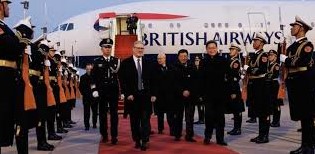
Web Desk (MNN); British Prime Minister Keir Starmer on Wednesday began his first official visit to China, marking the first trip by a UK premier to Beijing since 2018, as London seeks to stabilise and strengthen relations with the world’s second-largest economy amid growing uncertainty in ties with the United States.

Addressing more than 50 British business leaders accompanying him, Starmer encouraged companies to explore economic opportunities while underlining the need to remain alert to potential security risks.
He said the eight-year gap since a British prime minister last visited China made the delegation’s presence historic, stressing that the goal of engagement was to deliver tangible benefits for people back home.
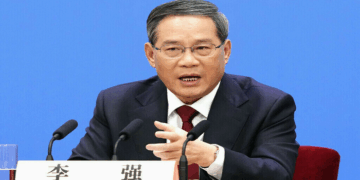
Starmer is scheduled to meet Chinese President Xi Jinping and Premier Li Qiang on Thursday. His visit signals a possible recalibration of UK-China relations after years of strain over Beijing’s policies in Hong Kong, its stance on the Ukraine conflict, and allegations by British intelligence agencies of Chinese espionage activities.
For China, the visit offers an opportunity to present itself as a stable and dependable partner at a time of global political and economic turbulence.
Starmer acknowledged that disengaging from China was not in Britain’s interests, noting that many Western nations were stepping up diplomatic outreach to Beijing as they hedge against unpredictability in Washington under President Donald Trump.
The visit comes amid recent tensions between London and Washington, including Trump’s remarks on Greenland, criticism of Britain’s decision regarding the Chagos Archipelago, and disputes over NATO’s role in Afghanistan.
Starmer maintained that Britain could expand economic cooperation with China without undermining its close relationship with the United States, citing long-standing defence, security and intelligence ties between the two allies.
The prime minister avoided detailing sensitive topics he might raise with Chinese leaders, including human rights concerns and the Ukraine war, but expressed hope for progress on easing visa travel between the two countries. He also rejected the notion that Britain must choose between the US and Europe, describing his approach as pragmatic and focused on national interest.