





































































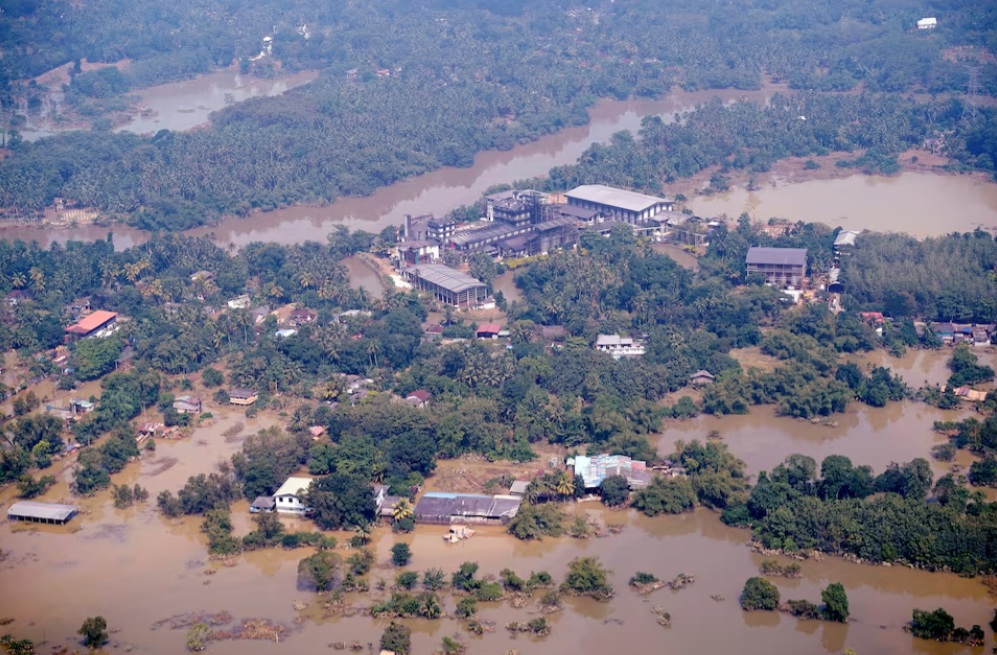
ALAWATHUGODA, Sri Lanka: Nawaz Nashra remembers clutching her three-year-old daughter, wrapping her in a bedsheet, and fleeing their home in central Sri Lanka as a landslide hit, triggered by a devastating cyclone that left 410 people dead in the country’s worst flooding in ten years.

Nashra and her pregnant sister, who lived with her, spent roughly 20 minutes making their way down the hillside from Alawathugoda village on Friday night, sometimes wading through mud up to their knees, until they reached a mosque situated at a lower elevation, where they stayed overnight.
“It was pitch dark…We could only hear a sound like thunder,” she told Reuters. “The house next to ours collapsed as we watched. There was no time to warn anyone.”
Residents said on Tuesday that around 10 homes in their area had been destroyed by Cyclone Ditwah, and that at least 25 people were feared dead as locals returned with long poles to probe the mud in search of bodies.
In recent days, powerful storms have battered South and Southeast Asia, causing widespread destruction across Indonesia, Malaysia, and Thailand and resulting in hundreds of fatalities.
In Sri Lanka, the Kandy district where Alawathugoda is located has reported 88 deaths, the highest toll in the country, and another 150 people remain unaccounted for. More than 20,000 people have been relocated to 176 emergency shelters.
Nationwide, officials said 336 people are still missing and 1.2 million have been impacted, as hundreds of military and police personnel searched landslide-hit zones to recover bodies.
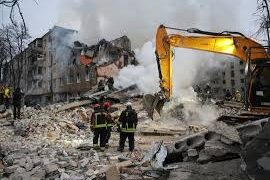
On Tuesday, authorities deployed bulldozers and backhoes to clear debris from roads, removing fallen trees and layers of mud to reopen access routes so food and fuel could reach isolated communities.
Efforts were also underway to restore electricity and communication networks after strong winds took down transmission lines, officials added.
Roughly 3 kilometers (2 miles) from Nashra’s home, another part of the village also showed clear signs of landslide damage, with partially destroyed houses and a chaotic mix of clothes, furniture, books, and mobile phones scattered in the sludge.
“They tell us to leave but where do we go? There is a temple nearby but there is only one bathroom for about 100 people. The facilities are not enough,” said Manjula Jayalath, 43, who lives in the area.