






















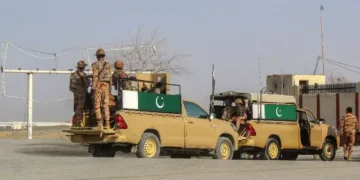











































News Desk (MNN); Pakistani security forces launched a series of strikes against Afghan Taliban-linked military installations in Kabul and Nangarhar on Monday night as part of the ongoing Operation Ghazab lil-Haq, according to security sources.

The operation was initiated on the night of February 26 following what Pakistani officials described as unprovoked firing by Afghan Taliban forces from across the border. Since then, the Pakistani military has intensified actions aimed at dismantling infrastructure allegedly used to support cross-border militant attacks.
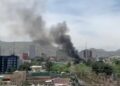
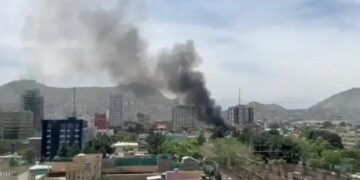
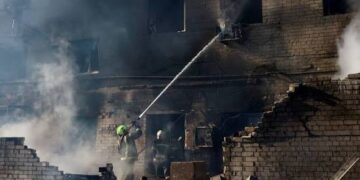
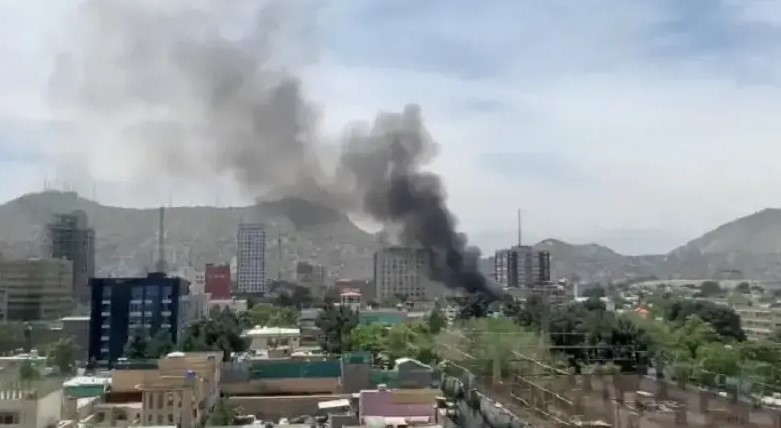
Security sources said that during the latest strikes, Pakistani forces destroyed technical support facilities and ammunition storage sites at two locations in the Afghan capital, Kabul. In the eastern Afghan province of Nangarhar, four separate military installations linked to the Afghan Taliban were targeted.
According to the sources, the strikes also destroyed logistics facilities, ammunition depots and technical infrastructure located near those installations. They further claimed that a drone assembly workshop and a command facility from where drones were allegedly launched were also eliminated during the operation.
The sources added that weapons stocks and drone-related infrastructure in Nangarhar and Kabul were destroyed. They alleged that the drones assembled in those facilities were built using parts manufactured in India and Israel.
Late-night updates from security officials indicated that the Pakistan Air Force continued its operations in Kabul and Nangarhar, successfully striking at least six targets in the two regions. Initial reports also suggested that several militants were killed during the strikes.
Earlier in the day, security sources said Pakistani armed forces had also targeted and destroyed hideouts belonging to Afghan Taliban fighters and militants referred to by the state as Fitna al-Khawarij in the Kurram sector of Khyber Pakhtunkhwa.
During those operations, several militants were killed while others managed to flee, according to a security official. The term Fitna al-Khawarij is used by the Pakistani state to refer to the banned Tehreek-i-Taliban Pakistan (TTP).
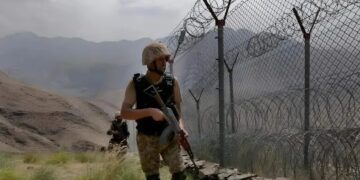
In another development, Pakistani forces destroyed Afghan Taliban posts across the Pakistan-Afghanistan border in the Bajaur sector of Khyber Pakhtunkhwa using guided missiles, security sources said.
A day earlier, on Sunday morning, the armed forces carried out overnight strikes in Afghanistan’s Kandahar province, destroying what officials described as technical support infrastructure and an equipment storage facility used by militant groups.
Pakistan’s Minister for Information Attaullah Tarar confirmed the military action and said that a tunnel allegedly used by terrorists had also been destroyed during the operation.
However, Tarar also reported that Afghan Taliban forces had targeted civilian areas in Pakistan’s Bajaur district through artillery and mortar fire from across the border. According to him, the shelling resulted in the deaths of four civilians and injuries to a child.
Meanwhile, Pakistan’s Ministry of Information rejected claims made by an Afghan Taliban spokesperson that a drug rehabilitation hospital in Kabul had been targeted in the strikes.
In a statement shared on social media, the ministry dismissed the allegation as false and misleading, saying the strikes were precisely directed at military installations and terrorist support infrastructure used for cross-border attacks against Pakistan.
Officials said that the targets included technical equipment storage facilities and ammunition depots belonging to Afghan Taliban and TTP-linked groups in Kabul and Nangarhar. They added that post-strike explosions caused by stored ammunition clearly contradicted claims that civilian facilities had been hit.
The ministry emphasized that Pakistan’s operations were carefully planned to avoid collateral damage and were aimed solely at eliminating infrastructure supporting militant activities.
Separately, Pakistan’s Foreign Office dismissed reports suggesting that Islamabad had declined China’s offer to facilitate dialogue with the Afghan Taliban.
Foreign Office spokesperson Tahir Andrabi said Pakistan and China remain close partners and maintain regular communication on issues of mutual interest.
“Any unnecessary speculation or fabrication of facts in this regard is unwarranted,” he said in response to media reports claiming that Pakistan had rejected Beijing’s proposal.
Earlier, China had reiterated its willingness to help ease tensions between Pakistan and Afghanistan. Chinese Foreign Ministry spokesperson Lin Jian said the immediate priority should be to prevent the conflict from escalating further and to bring both countries back to the negotiating table.
He added that China was prepared to continue its mediation efforts to promote reconciliation between Kabul and Islamabad.
These developments come amid a resurgence of militant activity in Pakistan since the Afghan Taliban returned to power in Kabul in 2021. Pakistani officials have repeatedly urged the Taliban administration to dismantle militant sanctuaries on Afghan soil, particularly those linked to the banned Tehreek-i-Taliban Pakistan.
Islamabad says those calls have largely gone unanswered.
Separately, security incidents were also reported in Khyber Pakhtunkhwa’s Bannu district, where at least two individuals were abducted and later killed in suspected militant-related incidents.
In one case in Domel tehsil, armed men kidnapped a prominent local figure identified as Malik Nabiullah along with three other individuals. The three were later released, but Nabiullah was taken to an undisclosed location where he was shot dead. His body was later recovered.
In another incident near Tochi Bridge in the Bakakhel area, unknown gunmen abducted a young man identified as Shazeb Khan from his village late Sunday night. His body was later found by the roadside.
Authorities said investigations into both incidents were underway.
Meanwhile, police in Bannu successfully foiled a suspected militant attack on the Fatah Khel police post. According to police sources, personnel monitoring thermal cameras detected suspicious movement and immediately opened fire.
The militants fled the area following the retaliatory firing, preventing what officials described as a potentially major attack.
Bannu has witnessed repeated security incidents in recent months, with both civilians and security personnel frequently targeted by militants.
Just days earlier, one attacker was killed and a police constable injured when militants attacked a checkpost guarding a camp for internally displaced persons in the Bakakhel area. Last month, militants also raided a mosque and abducted three brothers, two of whom were police personnel and were later killed.