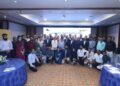







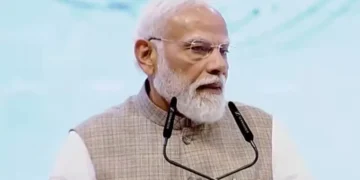











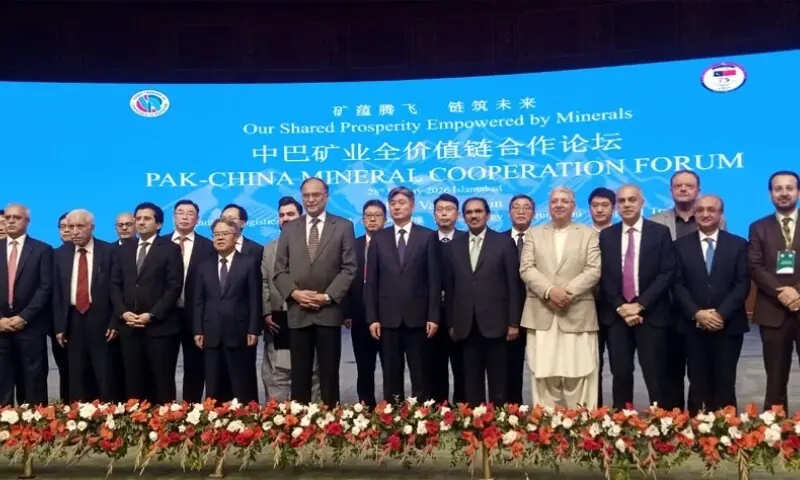
ISLAMABAD: Planning Minister Ahsan Iqbal on Wednesday said Pakistan’s mineral sector cannot be transformed without strategic partnerships, stressing that China’s role is central to unlocking the country’s vast but underutilised mineral potential.

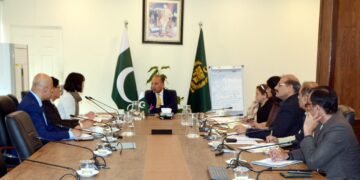
Addressing the Pak-China Mineral Cooperation Forum in Islamabad, the minister noted that Pakistan’s mineral wealth is estimated at $8 trillion, spread over 600,000 square kilometres and encompassing 92 identified minerals, 52 of which are commercially extracted, according to the Institute of Cost and Management Accountants of Pakistan (ICMA).
Despite this abundance, Iqbal said the sector’s performance remains far below its potential due to “structural constraints”. He emphasised that meaningful transformation would only be possible through collaboration with strategic partners, particularly China.
“Chinese enterprises bring advanced expertise across the entire mining value chain — from geological surveying and modern extraction to mineral processing, smelting, refining and manufacturing,” he said, citing existing joint projects such as Sandak copper-gold, Duddar lead-zinc and Thar coal as examples of what bilateral cooperation can achieve.
The minister said Pakistan now aims to move beyond raw extraction towards value addition by developing mineral processing plants, smelters, refining facilities and mineral-based industries linked with special economic zones and transport corridors.
In this context, he proposed the establishment of a Nokundi–Mashkel–Turbat–Gwadar corridor to connect Balochistan’s mineral resources with Gwadar port. Iqbal noted that Pakistan has around 5,000 operational mines producing nearly 68.5 million metric tonnes annually, yet mineral exports remain modest at about $2 billion, contributing only 2–3 per cent to GDP. He pointed out that despite possessing a wide variety of granite from Turbat to Chitral, Pakistan has failed to fully capitalise on the sector due to outdated practices.“We are still using blasting technology and destroying the value of our precious resources,” he said, calling for the adoption of modern extraction technologies.
The minister further revealed that only 40 per cent of Pakistan’s land has been geologically mapped and that around 90 per cent of mineral exports are either raw or semi-processed. With improved technology and value addition, he said, mineral exports could reach $6–8 billion annually within this decade. He stressed that mining-led development must strengthen national cohesion rather than exacerbate regional disparities, adding that communities in Balochistan and parts of Khyber Pakhtunkhwa must see tangible benefits in the form of employment, skills development, infrastructure, education and healthcare.
Reaffirming the government’s commitment to the safety and security of Chinese nationals, Iqbal termed it a top national priority. He said the future of Pakistan-China mineral cooperation lies in co-creating value through innovation, human capital development and long-term partnerships.
Inviting Chinese enterprises to play a leading role in copper, gold, antimony, tungsten, rare earth elements and other critical minerals, the minister said these resources would shape the future of clean energy and advanced manufacturing.“With China as our trusted partner, we can convert mineral wealth into industrial strength, export competitiveness and shared prosperity,” he said.
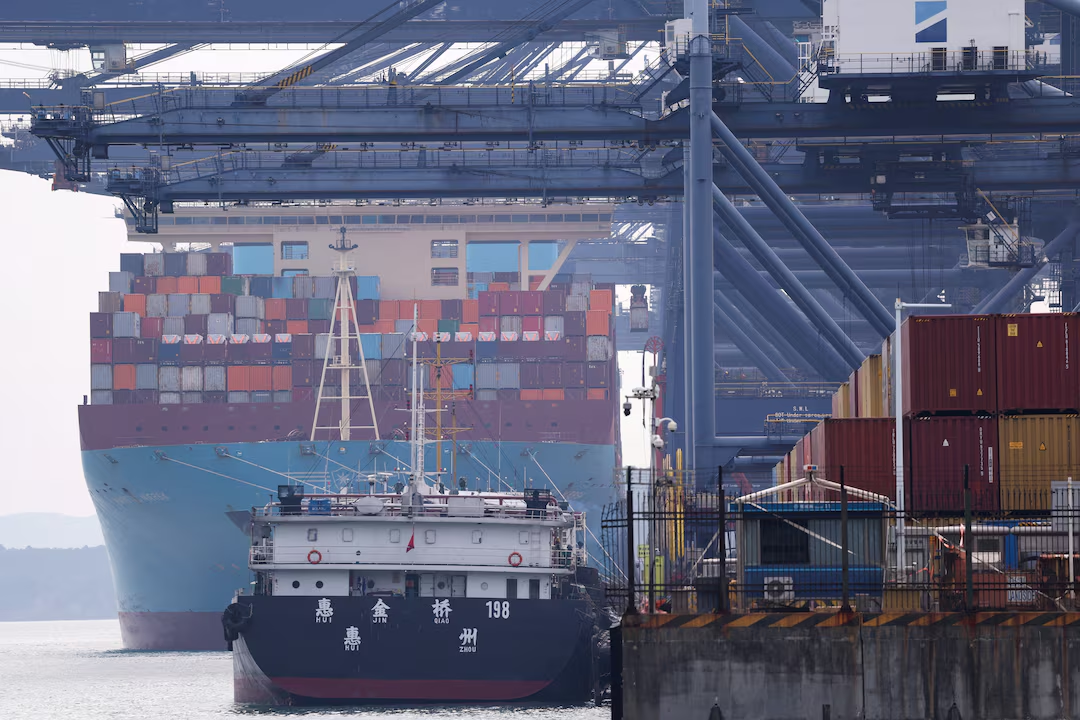
Earlier this month, Pakistan and China agreed to develop an upgraded version of the China-Pakistan Economic Corridor (CPEC), identifying mining as a key sector. Pakistan currently exports nearly $1.2 billion worth of copper ore to China annually.
Last year, Pakistan also entered the global critical minerals market by dispatching its first shipment of enriched rare earth elements and critical minerals to US-based Strategic Metals under a $500 million agreement, marking a shift towards becoming an active player in global strategic supply chains.