
































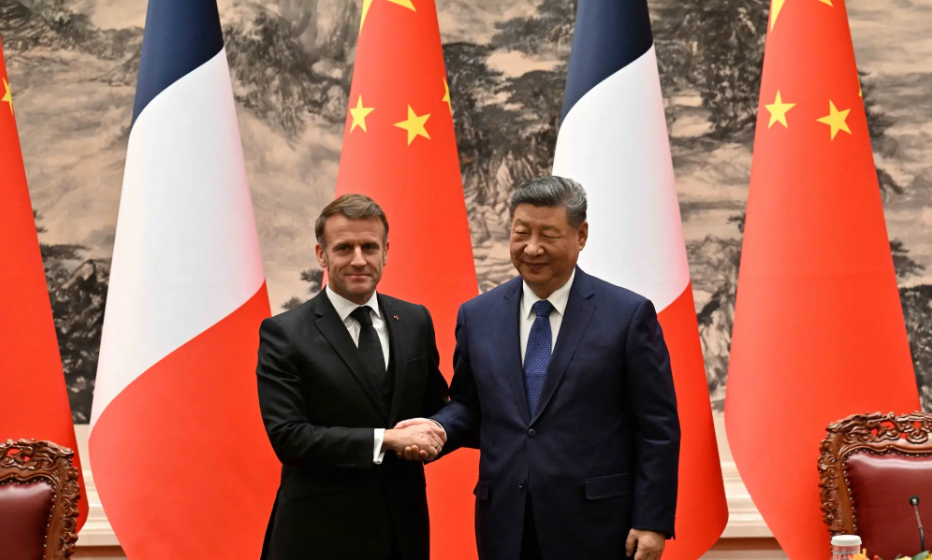
BEIJING: French President Emmanuel Macron on Thursday pressed Chinese leader Xi Jinping to strengthen collaboration on geopolitical issues, trade, and environmental challenges. His appeal comes as the European Union looks to Beijing for support in ending the conflict in Ukraine, while China aims to secure diplomatic gains amid US tariffs.

Macron travelled with a sizeable business delegation on his fourth state visit to China, hoping to enhance his foreign policy standing and secure new commercial opportunities for French industries. The visit is also part of his effort to reshape his political legacy in the remaining years of his presidency following a turbulent summer and ahead of the 2027 election.
China, meanwhile, is seeking to reduce trade tensions with the EU over its heavily subsidised electric vehicle industry. It also wants to position itself as a dependable trading partner and a viable alternative to the US market, particularly as global economies face recession risks linked to tariffs imposed by US President Donald Trump.
“Now, more than ever, dialogue between China and France is vital,” Macron told Xi during their meeting at Beijing’s Great Hall of the People. He said, “I propose a positive three-fold agenda for our relations, one of geopolitical stability, of economic rebalancing, and of environmental sustainability.” Referring to the war in Ukraine, he added, “We have to continue to rally in favour of peace and stability in the world… Our ability to work together is decisive.”
Politics temper economic ambitions
On Friday, Xi is expected to accompany Macron to Sichuan province a rare gesture, given how seldom the Chinese leader travels with visiting heads of state outside Beijing. Despite the cordial atmosphere, analysts note that political limitations continue to shape the relationship.
Xi is not expected to authorise a long-awaited order for 500 Airbus jets, as doing so could weaken China’s leverage in ongoing trade negotiations with the US, which is pushing for renewed Boeing purchases. Likewise, China is unlikely to adjust minimum pricing requirements that French cognac exporters must meet, since the related anti-dumping investigation was launched in response to EU tariffs on Chinese EVs.
A rollback of duties on EU pork is also improbable, with Beijing pressing Brussels to accept a minimum price mechanism for Chinese-made EVs. France supported the EV tariff measure in the October 2024 vote. Any Chinese gestures on Ukraine would likely remain consistent with Beijing’s recent assurances to Russia of continued support.
The EU is preparing to announce new economic security measures next month aimed at reducing dependence on China.
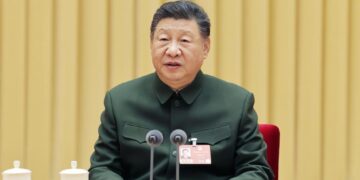
“No matter how the external environment changes, our two countries should always demonstrate the independence and strategic vision of major powers,” Xi told Macron, saying China remained committed to promoting peace in Ukraine and Gaza. He encouraged greater cooperation in aerospace, nuclear energy, artificial intelligence, green technologies and biopharmaceutical sectors.
Following their discussions, the two leaders signed 12 agreements covering bilateral investment, nuclear energy, population ageing and panda conservation.
Business interests at the forefront
Macron has long tried to uphold a firm European stance when dealing with China, while avoiding unnecessary confrontation, given that China remains a vital export market for many of France’s leading companies.
Executives from Airbus, BNP Paribas, Schneider Electric, Alstom and representatives from France’s dairy and poultry industries joined Macron on the trip.
The EU’s trade deficit with China has grown nearly 60 per cent since 2019, while France’s own deficit with the $19 trillion economy continues to expand.
“Our two countries have a role to play in laying out, with other partners, the foundations for rebalanced economic governance,” Macron told Xi, arguing for “fairer and stronger” rules instead of ones based on “survival of the fittest.” He added that building trust and managing supply chain risks was “essential.”
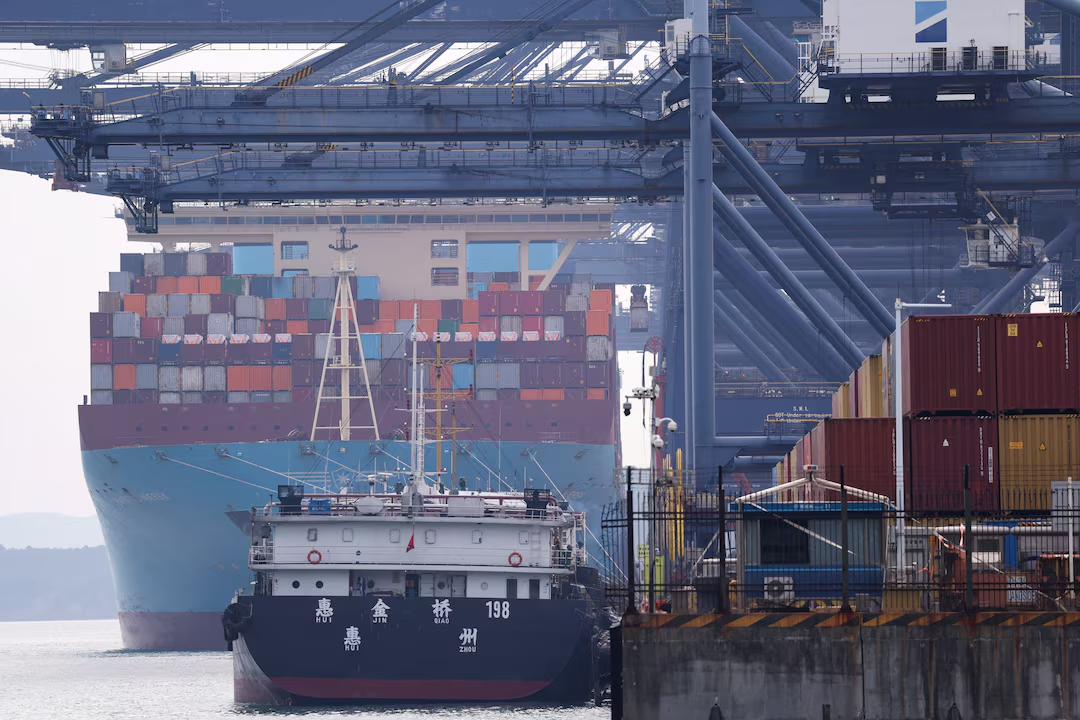
China is France’s seventh-largest trading partner, importing around $35 billion worth of French goods each year, including cosmetics, aircraft components and spirits, according to Chinese customs data. France imports about $45 billion in Chinese products largely inexpensive items purchased through online platforms such as Shein, made possible by an EU customs exemption on goods under €150 ($174.86).