










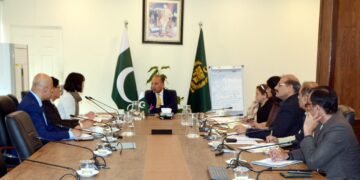
















































The government has committed to fully deregulating the sugar sector and continuing regular power tariff adjustments as part of its obligations under the International Monetary Fund’s (IMF) $7 billion Extended Fund Facility and the $1.4 billion Resilience and Sustainability Facility.

According to a report by The News, Pakistan has assured the Fund that it will increase taxes on fertilisers, pesticides and sugary items, while shifting selected goods to the standard 18 percent general sales tax slab. These measures are aimed at meeting the requirements for the completion of the second review and unlocking the next $1 billion tranche, along with $200 million from the RSF.
The IMF’s recently released staff report states that Pakistan has met most of the performance targets under the programme but warns that the balance of payments gap is expected to widen in the coming years, reaching $3.253 billion by 2029–30. This indicates that the country may require another IMF programme after the current one ends. The report highlights that the authorities have prepared contingency measures if revenues fall short by December 2025, which include raising excises on fertilisers and pesticides by five percentage points, imposing new excises on high-value sugary products, and expanding the sales tax base. The government is also ready to reduce or delay expenditures to protect fiscal targets.
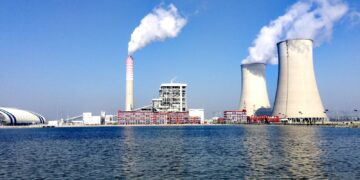
On the power sector, the report notes that Islamabad will continue implementing tariff reforms, reduce system losses and cut costs. Annual tariff rebasing has already been moved to January 2026, and the government aims to settle Rs1.2 trillion owed to commercial banks by early 2026. The plan also involves eliminating Rs128 billion in interest payments to IPPs and maintaining zero circular debt inflow until fiscal year 2031.
Last year, circular debt was reduced to Rs1.614 trillion. In governance and taxation reforms, the government will complete the installation of point-of-sale systems for 40,000 large retailers over the next two years, while all four provinces will move toward harmonised sales tax procedures. Development spending on new schemes will be restricted to 10 percent of the PSDP during the current fiscal year, with priority given to ongoing projects worth Rs2.5 trillion. Public procurement is being shifted to digital e-pads, with the Auditor General set to submit a compliance report by March 2026.
Under social protection measures, the Kafalat cash transfer under BISP will increase to Rs14,500 per quarter from January 2026, and the number of beneficiary families will rise to 10.2 million. Mandatory biometric verification will continue, and a long-awaited e-wallet system is expected to be launched by June 2026.The IMF acknowledges Pakistan’s progress on economic stabilisation. Foreign exchange reserves rose from $9.4 billion to $14.5 billion within a year, while the country achieved a primary surplus of 1.3 percent in line with programme targets.
Pakistan also recorded its first current account surplus in 14 years. The number of tax filers reached 5.2 million in FY2024 and is expected to grow to 7 million in FY2025. Inflation, driven recently by food prices and the impact of floods, is projected to ease to 7 percent this fiscal year. The Fund stresses that tight monetary policy and exchange rate flexibility remain essential to maintain stability and absorb external shocks.
The report underscores Pakistan’s heightened climate vulnerability, noting that the 2022 floods affected seven million people and caused massive damage to infrastructure, homes and livestock. It calls for stronger climate adaptation efforts, improved water resource management and enhanced disaster preparedness. The IMF also stresses the need for sustained reforms in taxation, governance, state-owned enterprises, energy and investment policy to ensure long-term growth.
Overall, the Fund concludes that Pakistan’s economic recovery, while fragile, is moving in the right direction. It emphasises that consistent policy implementation and deeper reforms will be crucial for reducing debt, raising revenues and safeguarding economic stability in the years ahead.