











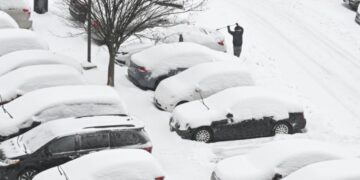






























































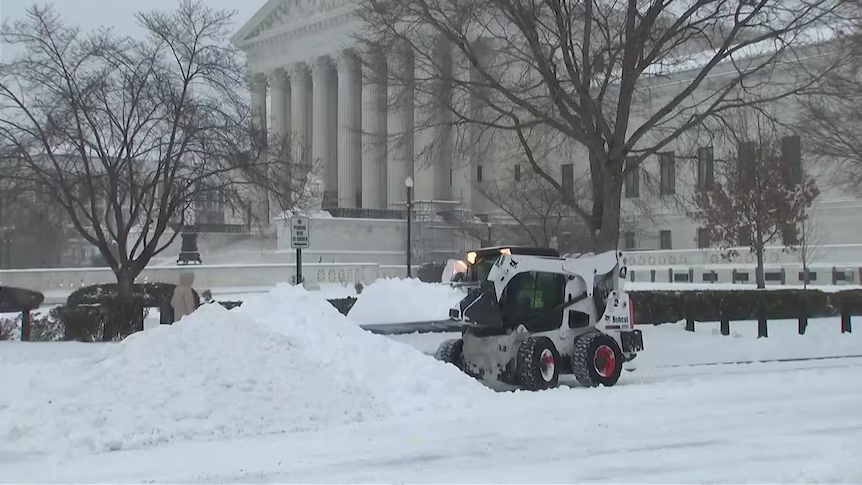
Web Desk (MNN); A massive winter storm swept across the northeastern United States over the weekend, leaving behind freezing temperatures, heavy snow, sleet, ice, widespread power outages, fatalities, and severe travel disruptions.

The storm, which began in the Ohio Valley and mid-South and extended to New England, was intensified by bitter Arctic air gripping much of the US east of the Rockies. Winter storm warnings were issued for the eastern third of the country, affecting around 118 million people, while an estimated 157 million Americans were advised to stay warm as temperatures ranged from sub-zero along the Canadian border to below freezing as far south as the Gulf of Mexico.
Gusty winds created extreme wind-chill conditions, plunging as low as minus 50°F in the northern Plains, while heavy snow, sometimes exceeding one foot, fell in parts of Colorado, Illinois, Indiana, Missouri, New Jersey, New York, and Pennsylvania. New York Governor Kathy Hochul mobilized National Guard troops in New York City, Long Island, and the Hudson Valley to assist with emergency response.
Air travel was severely affected. Flight-tracking website FlightAware reported over 11,000 flight cancellations on Sunday alone, with major airports including New York, Philadelphia, Charlotte, and Ronald Reagan National Airport in northern Virginia heavily impacted. On Monday, approximately 3,800 flights were cancelled and more than 1,000 delayed across the northeast.
Residents like January Cotrel of New York welcomed the snowfall, saying, “I pray for 2ft [61cm] every time we get a snowstorm… Let the city just shut down for a day, and it’s beautiful, and then we can get back to life.”
At least 10 storm-related deaths have been reported. In New York City alone, Mayor Zohran Mamdani confirmed five people were found dead outdoors over the weekend. In the southern state of Louisiana, two people died from hypothermia, while icy conditions in Tennessee brought down power lines.
Power outages affected more than 1 million homes and businesses across eight states from Texas to the Carolinas, with Tennessee experiencing roughly a third of all disruptions. On Monday, over 819,000 households were still without electricity, most concentrated in the South, according to poweroutage.com.
The Federal Emergency Management Agency and local authorities advised residents to remain indoors due to hazardous conditions on snow-covered and icy roads. The National Weather Service in New York predicted that temperatures would remain below freezing throughout the week, although any remaining snowfall is expected to be light and end Monday morning or early afternoon.
Authorities described the storm as “historic.” President Donald Trump approved federal emergency disaster declarations for multiple states, while 17 states and the District of Columbia declared weather emergencies. The Department of Energy authorized emergency measures to maintain electricity supply, including backup generation at key facilities in Texas and the mid-Atlantic region.
As the storm moves offshore, forecasters warn that Arctic air will continue to cause bitter cold and icy conditions across the region for the next several days.