





















































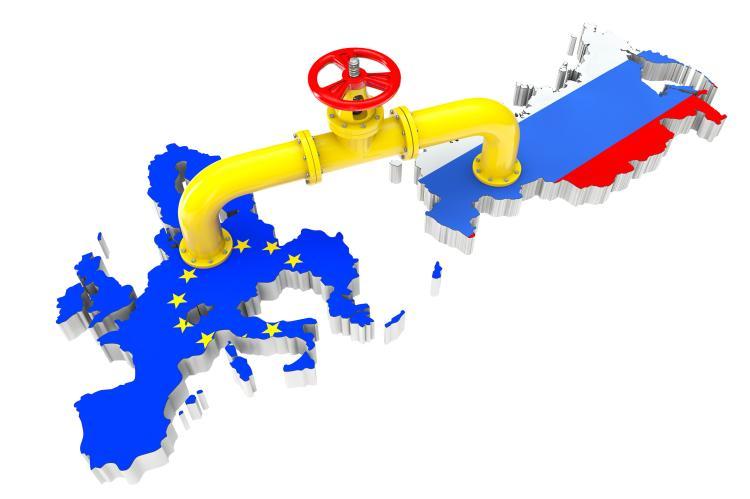
Web Desk (MNN); The European Union has reached a major agreement to completely phase out Russian gas imports by November 2027.

The provisional deal, finalised between the European Council and the European Parliament on Wednesday, marks a significant step toward cutting the bloc’s long-standing energy dependence on Moscow, which has been funding its war effort in Ukraine through energy revenues.
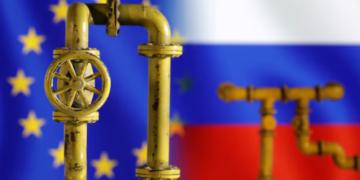
Although the timeline is longer than what some member states and the European Parliament initially proposed, the agreement outlines a clear roadmap. Under the plan, EU states will stop importing Russian liquefied natural gas (LNG) by the end of 2026, while pipeline gas imports will cease by November 2027.
The transition has been challenging due to several countries’ heavy reliance on Russian energy supplies. Before Russia launched its full-scale invasion of Ukraine in February 2022, nearly half of the EU’s gas imports came from Moscow.
The European Council said the move is intended to end “dependency on Russian energy following Russia’s weaponisation of gas supplies,” which has destabilised Europe’s energy market in recent years.
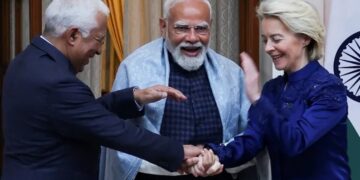
European Commission President Ursula von der Leyen welcomed the breakthrough, saying Europe is “closing the tap” on Russian fossil fuels for good and beginning a new era of energy independence.
EU leaders hailed the agreement as a major step toward ensuring long-term energy security. Energy Commissioner Dan Jorgensen said Europe has chosen “security and independence” and vowed there would be “no more blackmail and no more manipulation by Putin,” reaffirming the bloc’s support for Ukraine.
The deal also includes a phaseout of long-term and short-term contracts. Long-term pipeline agreements will be banned by September 30, 2027, or no later than November 1, 2027, depending on storage levels. Short-term pipeline contracts must end by June 17, 2026. For LNG, long-term deals will be prohibited beginning January 1, 2027, while short-term contracts will be phased out from April 25, 2026.
European companies will also be allowed to use “force majeure” clauses to legally end existing contracts in line with the EU’s import ban.
Despite reductions, the EU still relies on significant volumes of Russian gas. While pipeline imports have plunged, Russia was still the second-largest LNG supplier in 2024, providing about 20 percent of EU imports, trailing only the United States.
Political hurdles also remain. Hungary and Slovakia, which are heavily dependent on Russian energy and maintain close ties with Moscow, have consistently resisted such sanctions. The new agreement includes plans to address loopholes that allow both countries to continue importing Russian oil.
Hungary’s Foreign Minister Peter Szijjarto rejected the decision outright, saying Budapest would neither accept nor implement it and plans to challenge it in the EU’s Court of Justice. Slovakia’s Prime Minister Robert Fico said his government has “sufficient legal grounds” to consider a lawsuit, though he did not commit to taking action.