


































By Muhammad Salman Masood

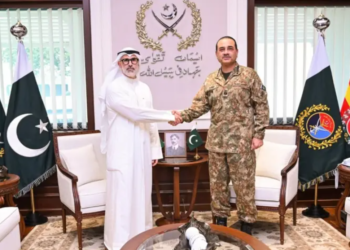
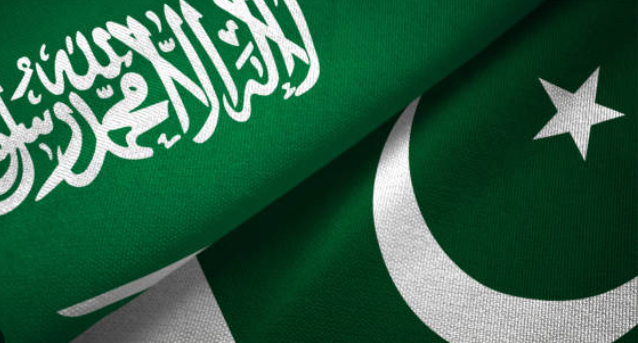
The conception of the Pak-Saudi relationship can be said to be the mainstay of the Pakistani foreign policy since the establishment of the nation of Pakistan in 1947. Historically, the society was introduced to this bond by telling a story of Islamic Brotherhood, which was born out of cultural similarity and religious similarity. But, with the signing of the Strategic Mutual Defense Agreement (SMDA) on the 17th of September 2025, this has radically changed the nature of this relationship. What we are witnessing now is the shift of a romantic alliance to a strict strategic alliance which is set by the realities of the 21st century geopolitics. This development implies that in the modern international system, ideological affiliation is no longer the main factor of defense collaboration but the interests of the states.
Traditionally, Pakistan policy towards the Middle East was that of a carefully neutral country, which frequently sought to play up and down in its relationships with rival powers. However, the present situation has required more aggressive and opportunity based approach. The recent increase in regional instability, which was highly precipitated by aggressiveness of posture of Israel towards the Arab countries and the consequential galvanization of the powers of the Middle East, offered Islamabad a special strategic opening. Pakistan has done well to move a step beyond providing diplomatic solidarity to establishing itself as a critical security provider. Islamabad has used its military strength as a stabilizing resource to send an allusion of readiness to make some serious security undertakings that extend way beyond political rhetoric.
The SMDA is an outcome of this environment of increased perceptions of threat and an increase in the states of the Gulf Cooperation Council (GCC) seeking more effective collective defense. In the case of Saudi Arabia, the agreement has two benefits. First, it avails the Pakistan battle-hardened and highly experienced armed forces which are also important in increasing the Kingdom own defense-industrial base. Second, and arguably the most important, it provides a kind of deterrence, which is often referred to as a nuclear umbrella, in an era where regional insecurity is at an all time peak. The payoffs are also tangible in the case of Pakistan. The agreement provides a channel through which vital economic aid and foreign direct investment are to be fulfilled and at the same time provide Islamabad with strategic relevance in the gulf. This enables Pakistan to employ its military, economic and diplomatic interests as a part of one unified foreign policy entity.
Academically this consensuality is a vivid display of the behavior of Realists in foreign policies. According to realism, states behave mainly to guarantee their survival and maximization of their power in a system of anarchy that exists in the international world. The Pakistan-Saudi pact, in this case, is not an emotional reaction but a strategic tool of foreign policy that is aimed at responding to the mutual security vulnerability. The military potential of Pakistan is an external security buffer to the Kingdom and the financial capability of the Kingdom is the strategic depth that Pakistan requires to deal with its internal economic demands.
But the way of this aggressive foreign policy is full of complicated difficulties. The major challenge is the balancing act that Pakistan has to play as far as its association with the United States is concerned. Despite the fact that Islamabad has presented the SMDA as a defensive system that is supportive of prevailing US-based security systems, there is always a threat of friction. In case Washington views this arrangement as a step toward an alternative security structure, particularly at times when relations between the US and Saudi are low, it may result in negative impact on the defense relationship between Pakistan and the West.
Moreover, the increasing military engagements of Pakistan overseas should be balanced with the serious problems at home. It is also facing the problem of domestic security and a volatile economy. The very real threat is that the decision to extend the military assets to the Gulf greatly may overstretch the diplomatic and defense strength of Pakistan at home. Also, the area is a competition field of the Great Power. The growing role of China in the Middle East, on one hand, along with the complicated interest of Iran to form alliances with some of the Gulf states, on the other hand, adds an element of unpredictability. Such external forces, as well as the historical absence of an integrated collective structure among the members of GCC, are major challenges to the long-term development of the agreement.
To address these weaknesses, Islamabad and Riyadh have put up adaptive policies to maintain the agreement. Pakistan has carefully packaged the cooperation to exclude the alienation of the United States by making the collaboration look defensive instead of incorporating the deployment of permanent, large-scale troop presence. This story has so far been triumphant in averting a huge diplomatic backlash. At the economic spectrum, Pakistan has tried to cope with its limitations through scaling its military forces as it relied on Saudi investments to stabilize its economy. But they are usually temporary remedies that fail to deal with the structural economic weaknesses in all their entirety.
On the diplomatic front, the two states have endeavored to have a certain level of equilibrium in the region. Pakistan has been especially wary not to engage in any direct involvement in sectarian or regional conflicts particularly with Iran. In allowing intra-regional disputes to take their course, Islamabad wants to safeguard its borders and preserve its status as a neutral mediator in case it could. Nevertheless, the perceptions of the divergent threats between GCC states continue to be a thorn in the flesh towards the direction of making this bilateral agreement broader and more integrated as a regional security organization.
Conclusively, the conclusions indicate that the Pakistan-Saudi defense agreement is resolute, but it cannot develop further due to geopolitical factors and shortage of resources. The current policies that have been employed have been effective in avoiding military overstretch and preserving the crucial international relations, yet they have not addressed the problematic aspects that lie within the global power rivalry. To make this alliance last longer, the roles should be better defined and the process towards formal institutionalization should be made. Enhancing the focus on economic and diplomatic cooperation, as opposed to military equipment, would give the long-term partnership the required basis. The SMDA is at once a monument to the truth that when it comes to the world of changing alliances, strategic interest and not sentiment is the real keynote of international relations.
Writer is a student of BS International Relations at National Defense University.
Disclaimer: “The views and opinions expressed in this article are solely those of the author and do not necessarily reflect the official policy of any organization”.