














































NEW DELHI (MNN); India and the European Union have formally signed a landmark free trade agreement, described by leaders on both sides as “the mother of all deals”, marking the culmination of nearly two decades of intermittent negotiations. The agreement comes at a time of global economic uncertainty, heightened by United States President Donald Trump’s trade war and rising protectionism.

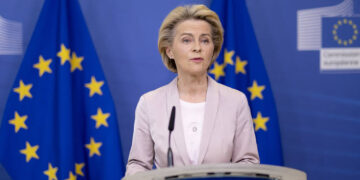
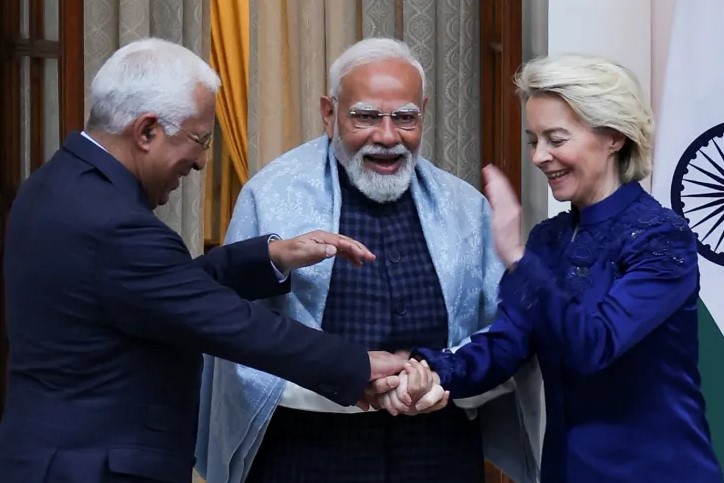
The pact brings together two major economic blocs, covering nearly two billion people and representing a combined market worth about 27 trillion dollars, equivalent to roughly 25 percent of global GDP. European Commission President Ursula von der Leyen and European Council President Antonio Costa were in New Delhi alongside Indian Prime Minister Narendra Modi as honorary guests for Republic Day celebrations, underscoring the political importance attached to the deal.
Prime Minister Modi said the agreement would create major opportunities for businesses, workers and investors in both India and Europe. He described the pact as a milestone that would strengthen confidence in India as a global manufacturing and services hub, while also expanding India’s integration with global supply chains. Ursula von der Leyen said Europe and India were making history by creating a free trade zone that would deliver mutual benefits and deepen their strategic partnership.
The agreement is India’s largest and most comprehensive trade deal to date, covering goods, services and investments across the EU’s customs union of 27 member states. It is expected to significantly reduce tariffs and improve market access on both sides. Analysts say the deal could give Indian exporters a strong advantage, especially after the EU withdrew its generalised scheme of preferences for India in 2023, which had exposed Indian goods to higher duties.
Under the pact, the EU will open access to 144 services subsectors for India, while India will allow EU firms entry into 102 services subsectors, including finance, maritime services and telecommunications. Modi told industry leaders in sectors such as textiles, gems and jewellery that the agreement would boost manufacturing, expand services and attract long-term investment.
One of the most sensitive areas in negotiations was India’s automobile sector, which has traditionally been highly protected, with tariffs of up to 110 percent. Talks between India and the EU collapsed in 2013 largely due to disagreements over this issue. Under the new deal, India has agreed to gradually open its automobile market to EU imports, reducing tariffs on most European cars to 30–35 percent initially and then phasing them down to 10 percent over several years. However, cars priced below 15,000 euros will remain subject to higher tariffs, while electric vehicles will be protected for at least five years to safeguard domestic manufacturers.
Despite these safeguards, shares of Indian carmakers dipped after the announcement, reflecting market concerns over increased competition. Over time, imports of EU vehicles will be capped through quotas, with limits on both internal combustion and electric vehicles.
The agreement will eliminate or reduce tariffs on 96.6 percent of EU goods exports to India, potentially saving European companies up to four billion euros annually. Indian tariffs on machinery, chemicals, pharmaceuticals, aircraft, medical equipment, wines and spirits will be sharply reduced. In return, the EU will scrap tariffs on 90 percent of Indian goods immediately, extending this to 93 percent within seven years. Key Indian exports such as seafood, textiles, apparel, leather goods, chemicals, gems and jewellery will benefit from zero or near-zero tariffs.
Overall, about 99.5 percent of bilateral trade will enjoy some form of tariff concession. However, challenges remain. India is still seeking better access for its steel exports, and the EU has not granted India an exemption from its carbon border adjustment mechanism, which taxes carbon-intensive goods. Indian officials hope to negotiate flexibility on this issue in the future.
Trade between India and the EU has grown rapidly over the past decade. Goods trade rose from about 74 billion dollars in 2020 to 136 billion dollars in 2024–25, making the EU India’s largest goods trading partner. India enjoys a trade surplus of more than 15 billion dollars with the bloc. Both sides aim to increase total trade to around 200 billion dollars by 2030.
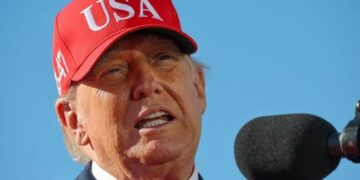
The deal also has clear geopolitical implications. Both India and the EU are looking to diversify trade away from the United States, where uncertainty has increased due to Trump’s aggressive tariff policies. Washington has already criticised the agreement, with US Treasury Secretary Scott Bessent accusing the EU of undermining its own stance on Russia by signing a trade pact with India.
Experts say the India-EU agreement reflects a broader strategic realignment, accelerated by global trade disruptions and uncertainty surrounding US policy. Analysts believe the deal signals that India and the EU are prepared to pursue their own economic and strategic agendas, potentially reshaping global trade dynamics in the years ahead.