


































































UNITED NATIONS: Pakistan has urged the UN Security Council to strengthen compliance with international law, warning that selective application of legal principles is accelerating global instability and undermining trust among states.

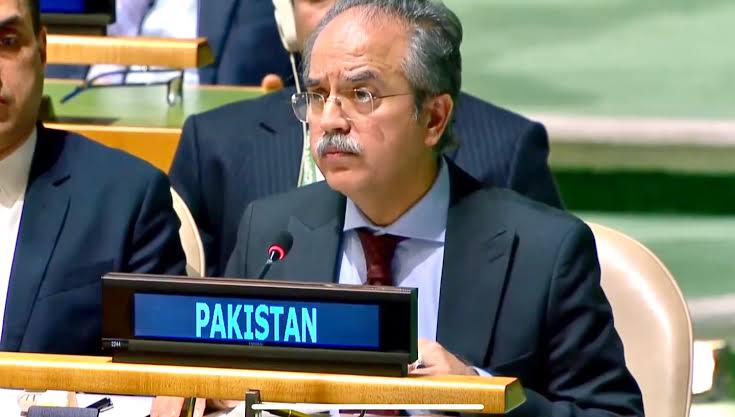
Addressing a high-level UNSC debate on January 26, Pakistan’s Permanent Representative to the UN, Ambassador Asim Iftikhar Ahmad, said the erosion of the rule of law was fuelling conflicts, humanitarian crises, and weakening the foundations of multilateralism. He stressed that international law was designed to ensure predictability and stability in relations between states, cautioning that when agreed rules are ignored, “law risks losing its meaning.”
Ambassador Ahmad said the core principles of the UN Charter — including sovereignty, territorial integrity, and the prohibition of the use of force — were increasingly under strain. He warned against attempts to normalise unilateral actions taken outside the UN framework.“Selective application of legal norms, erosion of treaty obligations, and unilateral actions have weakened trust among states and strained the multilateral system anchored in the UN Charter,” he said, adding that when power overrides law, instability deepens and peaceful coexistence is jeopardised.
Referring to Pakistan’s tensions with India, the envoy said Islamabad had experienced violations of international law first-hand, citing what he described as India’s military aggression last year. He noted that Pakistan’s response was carried out in self-defence under Article 51 of the UN Charter. He added that durable peace in South Asia depended on resolving the Kashmir dispute in accordance with UN resolutions and ensuring adherence to international agreements, including water-sharing treaties.
On the global front, Ambassador Ahmad said developing countries had long suffered from double standards in the international system. Despite this, he noted, the Global South continued to place its faith in the UN and a fair, rules-based international order. He also highlighted positive legal developments, including advances in international maritime law and recent advisory opinions by the International Court of Justice on Palestine and climate change, stressing that such rulings must be respected universally rather than selectively.
Pointing to Palestine, he said the situation illustrated the cost of unequal application of international law, warning that denying people their right to self-determination and disregarding UN resolutions undermined the credibility of the international system. Pakistan proposed concrete measures to improve compliance with international law, including stronger monitoring of UNSC resolution implementation, more frequent legal briefings to the Council, and greater reliance on the International Court of Justice for dispute resolution.
“The rule of law cannot be upheld through statements alone,” he said. “If multilateralism is to endure, law must prevail over force, and justice over impunity.”
Reaffirming Pakistan’s stance, Ambassador Ahmad said the country remained committed to peaceful dispute resolution and to a UN-centred international order based on equal rules for all states.