
















































ZURICH, (Reuters) — Spain has urged the European Union to move toward creating a joint military force, arguing that a unified army would strengthen the bloc’s ability to deter military and economic coercion.

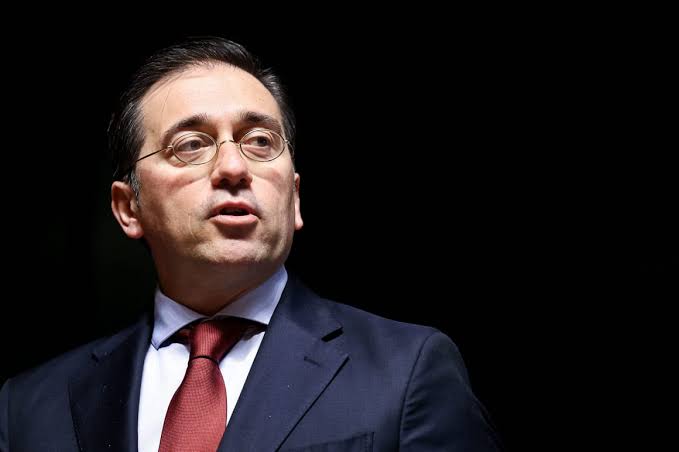
Spanish Foreign Minister José Manuel Albares made the remarks to Reutes ahead of meetings at the World Economic Forum in Davos. Albares said the EU should begin by pooling its existing defence assets and better integrating its defence industry before forming what he described as a “coalition of the willing.” While acknowledging concerns over whether European citizens would support collective military action, he argued that mobilising forces would be more feasible at the EU level than through 27 separate national armies.
“A joint effort would be more efficient than 27 individual militaries,” he said. His comments come ahead of an emergency meeting of EU leaders in Brussels on Thursday, convened to coordinate a response to U.S. President Donald Trump’s remarks about potentially buying or annexing Greenland. An EU Council spokesperson confirmed the meeting would proceed despite Trump later saying on social media that he and NATO Secretary General Mark Rutte had established a “framework of a deal.”
Speaking after talks in New Delhi with Indian Foreign Minister Subrahmanyam Jaishankar—where both sides discussed expanding defence cooperation—Albares stressed that a European army would not replace NATO. He reaffirmed the importance of the transatlantic alliance while emphasizing the need for Europe to assert its strategic autonomy.
“Europe must show that it is not a region that can be pressured militarily or economically,” he said. Although Trump later softened his stance on Greenland following discussions with Rutte, a senior Spanish official said Madrid’s position remained unchanged. Spain welcomed any dialogue conducted within the NATO framework, provided it was formally confirmed.
The idea of a unified European military dates back to 1951, when it was proposed to counter the Soviet Union and manage German rearmament. However, the plan was rejected by France’s parliament in 1954.“European defence was part of the EU’s founding vision,” Albares said. “It is now up to my generation to complete that project.”